Water Softener Installation in Berkeley Heights, NJ
Softeners, whole house filtration, and licensed plumber installs for Berkeley Heights homes, matched to what’s actually in Berkeley Heights’s water.
Water source
New Jersey American Water, Short Hills system, Berkeley Heights zone (PWSID NJ0712001)
Typical hardness
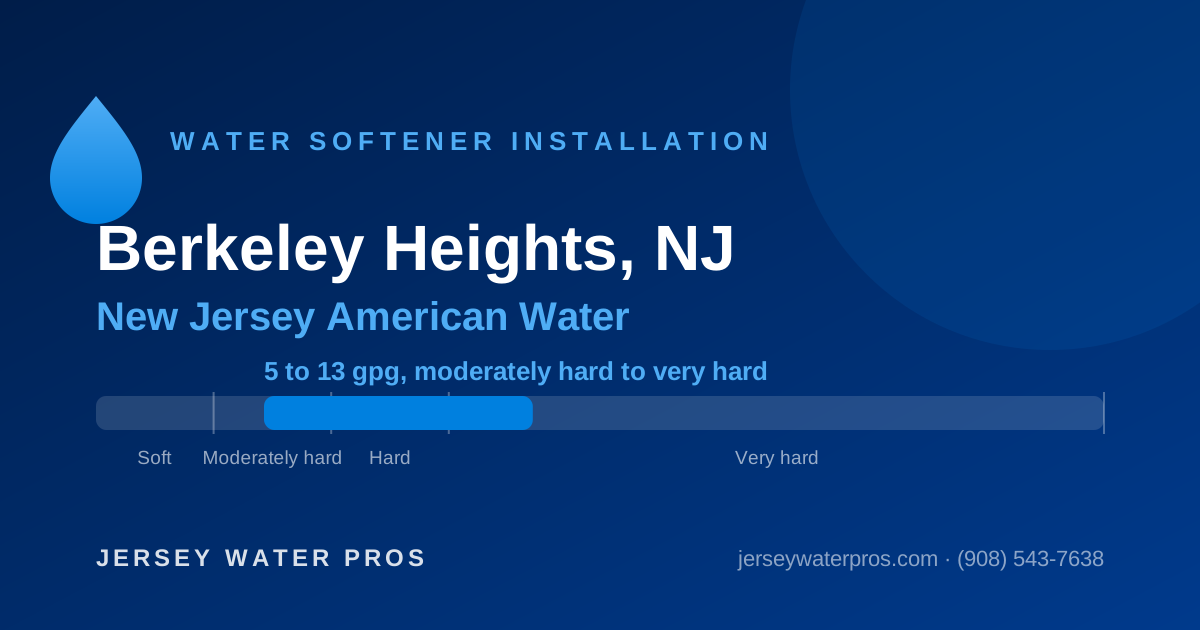
5 to 13 grains per gallon, moderately hard to very hard
County
Union County
Water softener installation in Berkeley Heights, NJ starts with one number: where your home falls in the wide 5 to 13 grain per gallon hardness range the utility publishes for this part of the Short Hills system. This page covers what the rest of the process looks like, from permits at the township construction office to where the equipment ties in, which local water problems a softener actually fixes, when whole house filtration belongs in the plan, and how the free quote turns all of it into a firm price for your house.
Berkeley Heights water
What Berkeley Heights homeowners are dealing with
Berkeley Heights gets its water from New Jersey American Water's Short Hills system. The zone serving Berkeley Heights, New Providence, and neighboring towns along the Passaic valley is fed by five wells in the Brunswick aquifer plus water purchased from the company's Raritan system, drawn from the Raritan River. That mix matters: the utility's own numbers put hardness anywhere from 90 to 222 mg/L, or about 5 to 13 grains per gallon, depending on the blend reaching your street.
The utility's latest water quality report shows the system met state and federal standards, with two things worth knowing. PFOA and PFOS were detected, at levels below New Jersey's limits. And in May 2025 the company received a violation notice after chlorine residual at the Short Hills Well Station measured below the required minimum; the station was taken out of service and affected customers were notified.
Because hardness in this zone spans a wide range, the practical question is what is coming out of your tap. The utility's annual water quality report lists the system-wide numbers, and only results from an NJDEP-certified lab are official for your own tap; we can help arrange that testing. Before you size any equipment for where your house sits in that 5-to-13-grain range, Jersey Water Pros offers a free in-home estimate.
Hard water and scale
New Jersey American Water's typical water quality sheet for the Berkeley Heights area lists total hardness of 90 to 222 mg/L as CaCO3, which works out to 5 to 13 grains per gallon. At the top of that range, water is very hard on the USGS scale. Hardness can vary with the blend of local well water and purchased Raritan River supply reaching your area, which is why scale on fixtures and in appliances can seem to come and go.
Chloramine taste and odor
The Berkeley Heights zone of the Short Hills system is disinfected with chloramine, and the utility reports a disinfectant residual of up to 3.2 mg/L in the distribution system. Chloramine keeps water safe but some homeowners notice a chemical taste or smell. Carbon-based filtration is the standard way to improve taste and odor at the tap.
PFAS detected below state limits
The 2025 annual water quality report for the Short Hills system lists PFOA at a highest running annual average of 9 ppt (range ND to 11) against New Jersey's MCL of 14 ppt, and PFOS at 5 ppt (range ND to 6) against the 13 ppt MCL. The system was in compliance. Homeowners who want an extra margin can consider systems certified to NSF/ANSI standards for reduction of PFOA and PFOS.
Lead service lines still being replaced
In 2025 lead sampling for the Short Hills system, the 90th percentile result was 3 ppb, well under the 15 ppb action level, but 2 of 56 homes sampled did exceed it. Lead comes from older service lines and home plumbing, not the mains. New Jersey American Water maintains an interactive service line map and says it will be removing lead and galvanized service lines over time to comply with New Jersey law.
Water softener installation in Berkeley Heights
Most water softener installations in Berkeley Heights follow the same basic path. It starts with a free in-home quote: we look at your plumbing, ask about symptoms like spotting and scale, and review where your home likely falls in the local 5 to 13 grain per gallon range. Because hardness in this zone shifts with the blend of well water and purchased river water, sizing from a real number matters more here than in towns with a single steady source.
Water treatment equipment ties into the main water line, usually in the basement just after the water meter and before the water heater. That placement protects the whole house, including the water heater, which is where hard water does its most expensive damage. A bypass valve goes in with the softener so you can route water around the unit for maintenance. Where the layout allows, we can leave outdoor spigots on unsoftened water so you are not running softened water into the garden.
Plumbing work of this kind in New Jersey generally requires a permit under the state Uniform Construction Code, filed with the Berkeley Heights construction office. We handle that paperwork as part of the job, and every installation is performed by a licensed New Jersey master plumber. For most single-family homes the physical install is done in a day. Permit review and inspection scheduling add time on either side, and the township sets that pace, so we build it into the timeline we give you up front.
Berkeley Heights hard water problems we fix
Berkeley Heights sits in a zone where the utility's own figures put hardness anywhere from 90 to 222 mg/L, about 5 to 13 grains per gallon. At the low end, you may only notice water spots on glassware and a film on shower doors. At the high end, the same minerals crust showerheads, etch a white ring around faucets, and build a layer of scale inside the water heater that makes it work harder and fail sooner.
Common complaints we hear from Berkeley Heights homeowners include:
- Scale on fixtures and glass. Calcium and magnesium left behind as water evaporates, worst near the top of the hardness range.
- Appliance wear. Dishwashers, washing machines, and especially tank and tankless water heaters accumulate scale that shortens their working life.
- Soap that will not lather. Hard water binds with soap, so you use more detergent and still get stiff towels and dull laundry.
- Dry skin and hair. The same mineral film that spots glass stays on skin after a shower.
The pattern many residents notice is that symptoms come and go. That fits how this zone is supplied: the blend of Brunswick aquifer wells and purchased Raritan River water changes, and hardness changes with it. A properly sized water softener is set up for the harder end of your home's range, so the water you feel stays consistent even when the supply behind it is not.
Whole house water filtration in Berkeley Heights
Softening handles minerals. Whole house water filtration deals with everything else Berkeley Heights homeowners ask us about, starting with taste. This zone is disinfected with chloramine, with a residual the utility reports at up to 3.2 mg/L in the distribution system. Chloramine is more stable than plain chlorine, which helps it hold a protective residual in the mains but means the taste does not simply fade if you let a glass sit. Standard carbon filters reduce it slowly; catalytic carbon is the media made for the job, and a whole-house catalytic carbon unit treats every tap, shower, and appliance at once.
Filtration is also where documented local detections come in. The Short Hills system's latest report lists PFOA and PFOS below New Jersey's limits, and lead sampling met the compliance standard even though a small number of tested homes exceeded the action level. For homeowners who want a margin beyond compliance, the sensible framing is certification: look for systems independently certified to NSF/ANSI standards for the specific contaminant you care about, whether that is PFOA and PFOS reduction or lead reduction at a drinking water tap.
We design filtration in that order: confirm what is actually in your water using the utility's annual water quality report and, where it matters, a test through an NJDEP-certified lab we can help arrange. Then match certified equipment to those findings rather than selling a one-size-fits-all package. The free quote covers softening and filtration together, since the two often share plumbing and space.
What water treatment costs in Berkeley Heights
We are careful with cost numbers because honest ones depend on your house. Rather than quote figures that may not match your situation, here is what actually moves the price of water treatment in Berkeley Heights:
- Where your water falls in the 5 to 13 grain range. Harder water and bigger households need higher-capacity equipment.
- What you are treating for. A softener alone is a different project than a softener plus whole-house carbon or a certified drinking water filter.
- Your plumbing layout. An accessible basement with the meter, water heater, and a drain close together installs faster than a tight crawlspace or a finished utility area.
- Permit fees. These are set by the township, not by us, and we pass them through as part of the written quote.
The free quote is how we put a real number on it. A visit to your home, a look at the plumbing, a conversation about symptoms and goals, and you get a written price for the full job: equipment, installation by a licensed New Jersey master plumber, permit handling, and startup. There is no charge and no obligation. We are based in nearby Summit, so Berkeley Heights is home territory for us, and follow-up service does not involve waiting on a crew from the other side of the state.
What we install in Berkeley Heights
Jersey Water Pros is based in Summit and installs across Union County, with every job performed by a licensed NJ master plumber.
Water quality varies by street and season. Only a NJDEP-certified lab can produce official results for your own tap.
FAQ
Berkeley Heights water questions
How hard is the water in Berkeley Heights?
New Jersey American Water's typical water quality sheet for the Berkeley Heights area lists 90 to 222 mg/L as CaCO3, which is 5 to 13 grains per gallon. That spans moderately hard to very hard on the USGS scale. The exact number at your tap can depend on the mix of local well water and purchased Raritan River water, so check the utility's annual water quality report, or arrange an NJDEP-certified lab test of your own tap (we can help set that up), before sizing a softener.
Is there PFAS in Berkeley Heights water?
The 2025 water quality report for the Short Hills system, which serves Berkeley Heights, lists PFOA at a highest running annual average of 9 ppt against New Jersey's 14 ppt limit, and PFOS at 5 ppt against the 13 ppt limit. The system was in compliance. Homeowners who want additional reduction can use treatment systems certified to NSF/ANSI standards for reduction of PFOA and PFOS.
Who supplies water in Berkeley Heights?
New Jersey American Water's Short Hills system (PWSID NJ0712001), sometimes called the Passaic Basin system. The local zone is supplied by five wells in the Brunswick aquifer plus purchased surface water from the company's Raritan system. The full system serves about 29 municipalities including Berkeley Heights, New Providence, and Summit.
Do I need a permit to install a water softener in Berkeley Heights?
Plumbing work of this kind generally requires a permit under New Jersey's Uniform Construction Code, filed with the Berkeley Heights construction office. We prepare and file the paperwork as part of the installation, and the work is performed by a licensed New Jersey master plumber so the job is ready for inspection.
How long does a water softener installation take in Berkeley Heights?
The physical installation at most single-family homes is completed in a day. The overall timeline also includes permit review and inspection scheduling, which run at the township's pace. We include the full expected schedule with your written quote so there are no surprises.
Which water softener is right for Berkeley Heights water?
Sizing matters more than brand here. Because this zone blends well water with purchased river water, hardness at your tap can sit anywhere from 5 to 13 grains per gallon, so we size for the harder end of your home's actual range. The utility's annual water quality report is the starting point, an NJDEP-certified lab test we can help arrange settles it, and many homeowners pair the softener with carbon filtration for the chloramine taste.
Service area
Where we work in Berkeley Heights
We install water softeners and whole house filtration across Berkeley Heights and the surrounding Union County towns.
Ready to fix your water in Berkeley Heights?
Get a straight written quote from a local pro. If your water's fine, we'll tell you that too.