Water Softener Installation in Summit, NJ
Softeners, whole house filtration, and licensed plumber installs for Summit homes, matched to what’s actually in Summit’s water.
Water source
New Jersey American Water, Short Hills system, Summit zone (PWSID NJ0712001)
Typical hardness
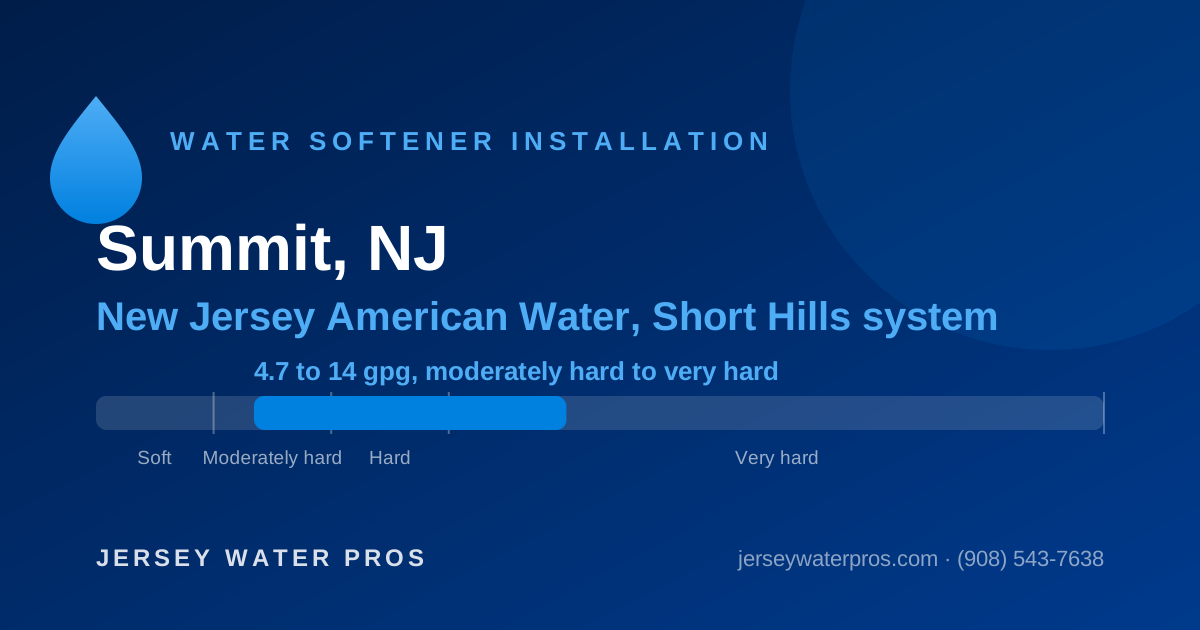
4.7 to 14 grains per gallon, moderately hard to very hard
County
Union County
Water softener installation in Summit, NJ starts with a complication the neighboring towns do not have: Summit's water is a blend. New Jersey American Water's Short Hills system mixes surface water from the Canoe Brook plant, well water, and purchased supplies, and hardness runs anywhere from 4.7 to 14 grains per gallon depending on which sources feed your street. Jersey Water Pros is based here in Summit, so this is the water our own team lives with. This page walks through how an install works in this city, the problems worth fixing, whole house filtration, and what shapes the cost before your free quote.
Summit water
What Summit homeowners are dealing with
Summit is the service area of New Jersey American Water's Short Hills system. Per the utility's typical water quality sheet for Summit, the water is a blend: the Canoe Brook treatment plant on the Passaic River, water from the company's Raritan system plant, purchased water from neighboring systems including the Passaic Valley Water Commission, and twelve wells drawing from the Brunswick aquifer. That mix is why two Summit neighborhoods can have noticeably different water.
Hardness reflects that blend. The utility's typical range is 80 to 240 mg/L (4.7 to 14 grains per gallon by its own conversion), and 2024 samples in the latest annual report ran from 52 to 342 mg/L. The same report lists manganese at up to 2,464 ppb at a sampling point against the 50 ppb aesthetic standard, and sodium up to 139 ppm, a number the report flags as informational for people on sodium-restricted diets. The report also discloses a May 2025 Notice of Violation for low chlorine residual at the Short Hills Well Station; the station was taken out of service and customers were notified.
On the compliance side, PFOA and PFOS were reported in 2025 at highest running annual averages of 9 and 5 ppt, below New Jersey's limits of 14 and 13. In 2025 the utility also invested $6.88 million to replace about 2.4 miles of Summit water mains installed as far back as the 1920s. Because water varies block to block here, the utility's annual water quality report is the place to look up your area's numbers; only NJDEP-certified lab results are official, and we can help arrange a lab test. For treatment options, Jersey Water Pros offers a free in-home estimate.
Hardness that swings by neighborhood and season
The utility's typical water quality sheet for the Short Hills system lists hardness of 80 to 240 mg/L, or 4.7 to 14.0 grains per gallon. The 2025 annual report's secondary-substances table shows 2024 samples ranging from 52 to 342 mg/L. Because Summit's water blends surface water from the Canoe Brook plant, well water, and purchased water, hardness at any one tap can vary widely.
Iron and manganese from well sources
The typical water quality sheet lists iron at 0.25 mg/L (aesthetic limit 0.3) and manganese from ND to 0.21 mg/L against a 0.05 mg/L aesthetic standard. The 2025 annual report shows manganese detections up to 2,464 ppb at a sampling point versus the 50 ppb secondary standard, which the report notes is set for laundry-staining concerns. These metals can cause brown or black staining on fixtures and laundry.
May 2025 Notice of Violation at the Short Hills Well Station
The 2025 annual report discloses that in May 2025 the system received a Notice of Violation because chlorine residual at the Short Hills Well Station measured below the required minimum of 0.5 ppm. The well station was removed from service and affected customers were notified with a Tier 2 public notice.
Lead results and service line replacement
In 2025 lead sampling, the 90th percentile was 3 ppb with a range of ND to 32 ppb; 2 of 56 sampled homes exceeded the 15 ppb action level, though the system met the compliance standard. New Jersey American Water's 2025 Summit main-replacement project ($6.88 million, about 2.4 miles of mains dating to the 1920s) included replacing lead and galvanized service lines along the route, part of the statewide push to remove them by 2031.
Water softener installation in Summit
Every Summit install starts with pinning down your number. Because hardness in the Short Hills system can sit near 5 grains per gallon on one street and near 14 on another, we do not size equipment off a citywide average. We start from the utility's published figures for your area and, when the picture is unclear, help arrange a test through an NJDEP-certified lab so the softener is sized to what actually reaches your tap.
The install itself follows a standard path. A licensed New Jersey master plumber ties the softener into the main line after the meter, ahead of the water heater, with a bypass valve so you can route around the unit for service. Summit's housing includes plenty of homes from the early 1900s, and older basements sometimes bring quirks: a main shutoff that needs replacing, galvanized pipe near the meter, or a tight mechanical room shared with a boiler. We scope all of that during the free quote.
Cutting into a supply line requires a plumbing permit under New Jersey's Uniform Construction Code, filed with the City of Summit's construction office. We handle the filing, and the city inspects the completed work. Plan on a few hours to one day for the physical install, plus the calendar time the permit and inspection take. Since our team is based in Summit, follow-up visits, salt questions, and service calls are about as local as it gets.
Summit hard water and staining problems we fix
Summit homeowners often compare notes and find they are describing different water. That is real, not imagined. The utility's typical range for the Short Hills system is 80 to 240 mg/L of hardness, and 2024 sampling in the latest annual report ran from 52 to 342 mg/L. A home at the low end sees spotting and slow scale. A home at the high end, up around 14 grains per gallon or more, sees crusted showerheads, cloudy glassware, stiff laundry, and a water heater that fills with sediment years ahead of schedule. A softener sized for your end of that range stops the scale at the point of entry.
The blend brings a second problem softeners alone do not always solve: staining. Part of Summit's supply comes from wells, and the utility's own reports show iron near the 0.3 mg/L aesthetic limit and manganese well above the 50 ppb aesthetic standard at some sampling points. Iron leaves orange-brown marks on fixtures and laundry; manganese leaves brown to black ones. Both are staining and taste concerns rather than health violations, but they are stubborn. A softener can handle small amounts of dissolved iron, while heavier or recurring staining usually calls for dedicated iron and manganese filtration ahead of the softener. Which one your home needs depends on your levels, which is exactly what we work out from the published data and, where useful, a certified lab test before recommending equipment.
Whole house water filtration in Summit
Taste is the most common reason Summit homeowners add whole house filtration. The Short Hills system disinfects with chlorine, and the utility's typical water quality sheet lists disinfectant residuals in the distribution system anywhere from non-detect to 3.2 mg/L, so the strength of the taste can vary from street to street and day to day. Whole house carbon filtration removes chlorine taste and odor at the point of entry, and installing carbon ahead of a softener has a second benefit: it protects the softening resin, which disinfectants degrade over time.
On contaminants, the system's 2025 annual report lists PFOA at a highest running annual average of 9 ppt and PFOS at 5 ppt, both below New Jersey's limits of 14 and 13. Homeowners who want levels lower than the state requires should look for treatment certified to NSF/ANSI standards for PFOA and PFOS reduction, whether that is a whole house unit or reverse osmosis at the kitchen sink. Certification to the standard is the thing to verify, not the brochure language.
Two Summit-specific notes from the same report are worth knowing. Lead sampling met the compliance standard, but 2 of 56 sampled homes did exceed the action level, a reminder that lead here is about individual service lines and home plumbing. A drinking-tap filter certified to NSF/ANSI 53 for lead reduction is a sensible interim step while lines are confirmed. And sodium was reported as high as 139 ppm, which the report flags for people on sodium-restricted diets. A softener adds sodium in exchange for the hardness it removes, and the amount rises with the hardness level, so households watching sodium often pair a softener with reverse osmosis at the drinking tap.
What water treatment costs in Summit
Cost in Summit varies more than in most nearby towns for one reason: the water does. A home near 5 grains per gallon may need only a modest softener. A home near 14 grains with iron staining and a chlorine taste complaint is looking at more capacity and possibly two pieces of equipment. Rather than publish numbers that would be wrong for half the city, we price each home from its own water and its own basement.
The drivers are consistent: equipment type and capacity, install conditions such as the distance from tie-in to drain, any older plumbing that needs attention at the connection point, and permit fees, which the City of Summit sets and which pass through at cost. Be skeptical of a firm price quoted before anyone has seen your mechanical room, and equally skeptical of a countertop water demonstration used to close a sale. We do not do those. Hardness data is published, and health questions belong with an NJDEP-certified lab, which we can help arrange.
The free quote is straightforward: a licensed NJ master plumber visits, checks your tie-in point and drain options, reviews the published numbers for your part of the city, and gives you a written, itemized quote covering equipment, labor, and permits. There is no obligation, and because we are based in Summit, the follow-through is local.
What we install in Summit
Jersey Water Pros is based in Summit and installs across Union County, with every job performed by a licensed NJ master plumber.
Water quality varies by street and season. Only a NJDEP-certified lab can produce official results for your own tap.
FAQ
Summit water questions
How hard is the water in Summit?
New Jersey American Water's typical water quality sheet for the Short Hills system lists 80 to 240 mg/L, which is 4.7 to 14 grains per gallon, moderately hard to very hard on the USGS scale. The 2025 annual report shows 2024 samples from 52 to 342 mg/L, so the number at your tap depends on which sources are feeding your neighborhood that day.
Why does Summit water sometimes look brown or stain fixtures?
Part of Summit's supply comes from wells in the Brunswick aquifer (the utility's typical water quality sheet for Summit lists twelve), and the utility's own reports show iron near the 0.3 mg/L aesthetic limit and manganese detections well above the 50 ppb aesthetic standard at some sampling points. Both metals are naturally occurring and are flagged for staining, not health, but they can discolor water and mark laundry and fixtures.
Did Summit's water system have a violation recently?
Yes. The 2025 annual water quality report discloses a May 2025 Notice of Violation because chlorine residual at the Short Hills Well Station measured below the required 0.5 ppm minimum. The utility removed the well station from service and notified affected customers with a Tier 2 public notice. Aside from that event, the report's tables show compliance achieved for the other regulated substances it lists.
Do I need a permit to install a water softener in Summit?
Yes. Tying a softener into your supply line is plumbing work that requires a permit under New Jersey's Uniform Construction Code, filed with the City of Summit's construction office. Jersey Water Pros handles the filing, the work is performed by a licensed NJ master plumber as the code requires, and the city inspects the completed installation.
How long does water softener installation take in Summit?
The physical install usually takes a few hours to one day. What adds calendar time is the permit and inspection cycle with the city, and in some Summit homes a sizing step up front, because hardness in the Short Hills system runs anywhere from 4.7 to 14 grains per gallon depending on the blend reaching your street. We confirm your number before equipment is ordered so the system is sized once, correctly.
Which water softener is right for Summit's water?
It depends where your street falls in the system's 4.7 to 14 grains per gallon range and whether your home also sees iron or manganese staining from the well side of the blend. Homes at the low end usually need a standard metered softener; homes at the high end need more capacity, and recurring staining can call for dedicated iron and manganese filtration ahead of the softener. Chlorine taste is a separate question that carbon filtration answers. The free quote sorts out which combination your water actually requires.
Service area
Where we work in Summit
We install water softeners and whole house filtration across Summit and the surrounding Union County towns.
Ready to fix your water in Summit?
Get a straight written quote from a local pro. If your water's fine, we'll tell you that too.