Water Softener Installation in New Providence, NJ
Softeners, whole house filtration, and licensed plumber installs for New Providence homes, matched to what’s actually in New Providence’s water.
Water source
New Jersey American Water, Short Hills system, Berkeley Heights zone (PWSID NJ0712001)
Typical hardness
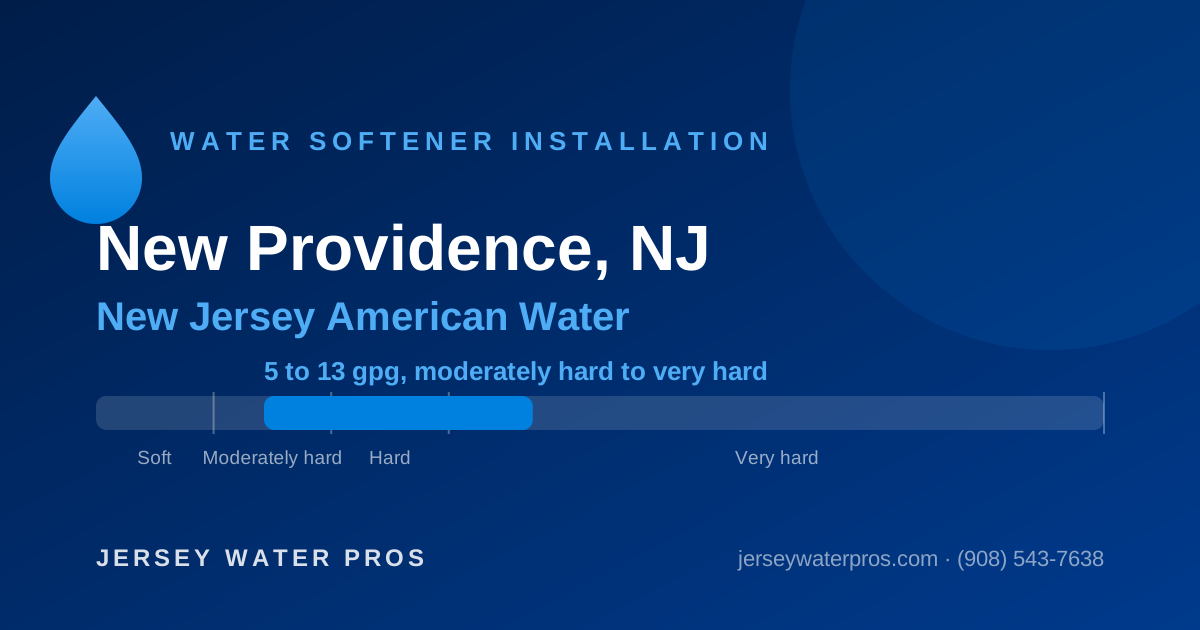
5 to 13 grains per gallon, moderately hard to very hard
County
Union County
Water softener installation in New Providence, NJ starts with the same question we ask in every borough home: what is actually coming out of your tap? The utility's published range for this zone runs 5 to 13 grains per gallon depending on the supply blend, which is too wide to size equipment by guesswork. Below is how the installation works here, the hard water problems it solves, where whole house water filtration fits, and how our free quote pins down the cost for your home.
New Providence water
What New Providence homeowners are dealing with
New Providence is served by New Jersey American Water's Short Hills system, the same system that supplies Berkeley Heights, Summit, and much of the surrounding Passaic valley. The zone covering New Providence draws on five wells in the Brunswick aquifer and purchased Raritan River water from the company's Raritan system. The utility's published figures for this zone show hardness of 90 to 222 mg/L (about 5 to 13 grains per gallon), sodium of 33 to 96 mg/L, and chloramine disinfection.
The system's 2025 water quality report shows compliance with state and federal standards. PFOA and PFOS were detected at running annual averages of 9 and 5 ppt, under New Jersey's limits of 14 and 13 ppt. The report also discloses a May 2025 violation notice for low chlorine residual at the Short Hills Well Station; the station was taken offline and affected customers were notified.
With hardness that can run anywhere from 5 to 13 grains depending on the supply blend, the useful number is the one at your kitchen tap. The utility's annual water quality report is the place to start, and official results for your own tap come only from an NJDEP-certified lab, a test we can help arrange. Before you invest in treatment, Jersey Water Pros offers a free in-home estimate.
Wide hardness swings
The utility's typical water quality sheet covering New Providence lists hardness of 90 to 222 mg/L as CaCO3 (5 to 13 grains per gallon). The low end is moderately hard; the high end is very hard. Because the zone blends Brunswick aquifer well water with purchased Raritan River water, hardness at your tap can shift with the supply mix. That is a reason softeners here are sized from your home's actual numbers, starting with the utility's annual water quality report, not a town average.
Chloramine disinfection
This zone of the Short Hills system uses chloramine as its disinfectant, with residual levels in the distribution system reported from ND up to 3.2 mg/L. That residual protects the water on its way to you, but it is also what many homeowners taste. Point-of-use or whole-house carbon filtration is the usual fix for taste and odor.
May 2025 chlorine residual violation
The system's 2025 water quality report discloses a Notice of Violation received in May 2025 after chlorine residual at the Short Hills Well Station measured below the required 0.5 ppm minimum. The utility removed the well station from service and issued a Tier 2 public notification to affected customers.
PFAS detected below state limits
The 2025 report lists PFOA at a highest running annual average of 9 ppt (New Jersey MCL: 14 ppt) and PFOS at 5 ppt (MCL: 13 ppt) for the Short Hills system. Both are below the state limits. Systems certified to NSF/ANSI standards for reduction of PFOA and PFOS are available for homeowners who want levels lower still.
Water softener installation in New Providence
New Providence installs follow a rhythm we know well. In many borough homes the water meter, water heater, and a floor drain sit together in a basement utility area, and that layout is ideal for a water softener. The unit ties into the main line after the meter and ahead of the water heater, so every fixture downstream gets treated water and the water heater stops accumulating scale.
The visit starts before any pipe is cut. We review your plumbing, confirm there is a drain for the softener's regeneration cycle and an outlet for the valve, and talk through where you land in the local hardness range. Homes without a convenient drain or with finished basements take a little more planning, not a different project.
On paperwork: plumbing alterations in New Jersey generally require a permit under the Uniform Construction Code, filed with the borough's construction office. We prepare and file it, and a licensed New Jersey master plumber performs the installation, which keeps the inspection smooth. The physical work at a typical single-family home is done in one day. Permit processing and the inspection visit add calendar time around it, and that pace belongs to the borough, so we set expectations honestly in the written quote instead of promising dates we do not control.
New Providence hard water problems we fix
The utility's figures for the zone serving New Providence run from 90 to 222 mg/L, about 5 to 13 grains per gallon. Both ends of that range cause trouble; they just cause different amounts of it. Around town, the symptoms we are called about most often are:
- Water heater scale. Minerals drop out of solution fastest in hot water, so the water heater takes the worst of it. Scale insulates the heating element or burner, wasting energy long before the unit fails.
- Spotted dishes and cloudy glassware. The classic sign, and often the first one people notice after moving in.
- Crusted aerators and showerheads. White buildup that returns weeks after you clean it.
- More soap, worse results. Hard water neutralizes detergent, so laundry comes out stiff and skin feels dry after showers.
One local wrinkle worth knowing: because the supply mixes Brunswick aquifer well water with purchased Raritan River water, the blend reaching your street can shift, and your symptoms can shift with it. A stretch of milder water does not mean the problem is gone. We size softeners for the harder end of your home's documented range so the equipment keeps up on the hardest days. There is also a sodium note in the utility's published data for this zone, 33 to 96 mg/L before any softening, which matters to some households and shapes the advice we give about softener settings and drinking water taps.
Whole house water filtration in New Providence
Taste is the other half of most New Providence water conversations. This zone carries a chloramine residual the utility reports at up to 3.2 mg/L, and chloramine is persistent by design. It does not dissipate from a pitcher on the counter the way chlorine does, which is why homeowners who never minded chlorinated water elsewhere notice it here. The usual fix is carbon filtration sized for chloramine, ideally catalytic carbon, installed either at a single drinking water tap or as a whole house unit that also protects showers and appliances.
For contaminants beyond taste, we let the documented record lead. The Short Hills system's latest report lists PFOA and PFOS detections below New Jersey's limits, and it discloses the May 2025 chlorine residual violation at the Short Hills Well Station, which the utility addressed by taking the station out of service. Facts like these are why some households add certified filtration even when the system is in compliance. The right way to do that is to choose equipment independently certified to NSF/ANSI standards for the specific reduction claim, such as PFOA and PFOS reduction, rather than trusting marketing language.
Households watching sodium intake sometimes pair a softener with a reverse osmosis drinking water system at the kitchen sink, since softening exchanges hardness minerals for a small amount of sodium and this zone's water already carries some. We walk through those tradeoffs during the free quote so the system fits how your household actually drinks and cooks.
What water treatment costs in New Providence
We do not publish flat prices for water treatment in New Providence because two houses on the same street can be very different jobs. What determines your number:
- Hardness and household size. A family of five at the top of the 5 to 13 grain range needs more capacity than a couple at the bottom of it.
- Scope. Softener only, softener plus whole house carbon, or a full setup with a certified drinking water system at the sink.
- Site conditions. Basement access, drain location, and how much repiping the tie-in requires.
- Borough permit fees, which are set by New Providence and passed through at cost in the written quote.
Operating costs deserve a mention too. A softener consumes salt and a small amount of water during regeneration, and modern demand-initiated units regenerate based on actual use rather than a timer, which keeps both in check. Households that choose potassium chloride instead of sodium chloride typically pay more per bag; that is a preference we will discuss, not a requirement.
The free quote is the honest way to price all of this. We visit, inspect the plumbing, review your goals, and hand you a written price covering equipment, installation by a licensed New Jersey master plumber, permits, and startup. No charge, no obligation, and because we are based one town over in Summit, service afterward is genuinely local.
What we install in New Providence
Jersey Water Pros is based in Summit and installs across Union County, with every job performed by a licensed NJ master plumber.
Water quality varies by street and season. Only a NJDEP-certified lab can produce official results for your own tap.
FAQ
New Providence water questions
How hard is the water in New Providence?
New Jersey American Water's typical water quality sheet for the zone serving New Providence lists 90 to 222 mg/L as CaCO3, about 5 to 13 grains per gallon, spanning moderately hard to very hard. The system blends local well water with purchased river water, so an NJDEP-certified lab test of your own tap, which we can help arrange, is the way to know where your home falls in that range.
Who supplies New Providence's drinking water?
New Jersey American Water, through its Short Hills system (PWSID NJ0712001). The zone serving New Providence, Berkeley Heights, and nearby towns is fed by five Brunswick aquifer wells plus purchased surface water from the company's Raritan system, drawn from the Raritan River.
Why does my New Providence tap water taste like chlorine?
This zone is disinfected with chloramine, and the utility reports residual levels in the distribution system from non-detect up to 3.2 mg/L. The residual is required to keep water safe in the pipes, but it is what you taste. Activated carbon filtration, at the faucet or whole-house, is the standard remedy for taste and odor.
Do I need a permit to install a water softener in New Providence?
In general, yes. Plumbing alterations like a softener tie-in fall under New Jersey's Uniform Construction Code, and the permit is filed with the borough's construction office. We handle the filing and the inspection scheduling as part of the job, and the installation itself is performed by a licensed New Jersey master plumber.
How long does a water softener installation take in New Providence?
Plan on one day of physical work for a typical single-family home. Permit processing and the inspection visit add calendar time set by the borough, and we include the full expected timeline in your written quote so you know the schedule before we start.
Which system is right for New Providence water?
For most homes, a demand-initiated softener sized to the harder end of your documented range, since this zone's published hardness runs 5 to 13 grains per gallon. Many households add carbon filtration for the chloramine taste, and some on sodium-restricted diets add a reverse osmosis tap for drinking water. The utility's annual water quality report is the starting point, and an NJDEP-certified lab test we can help arrange settles what your own tap needs.
Service area
Where we work in New Providence
We install water softeners and whole house filtration across New Providence and the surrounding Union County towns.
Ready to fix your water in New Providence?
Get a straight written quote from a local pro. If your water's fine, we'll tell you that too.