Water Softener Installation in Madison, NJ
Softeners, whole house filtration, and licensed plumber installs for Madison homes, matched to what’s actually in Madison’s water.
Water source
Madison Water Department (PWSID NJ1417001), borough owned
Typical hardness
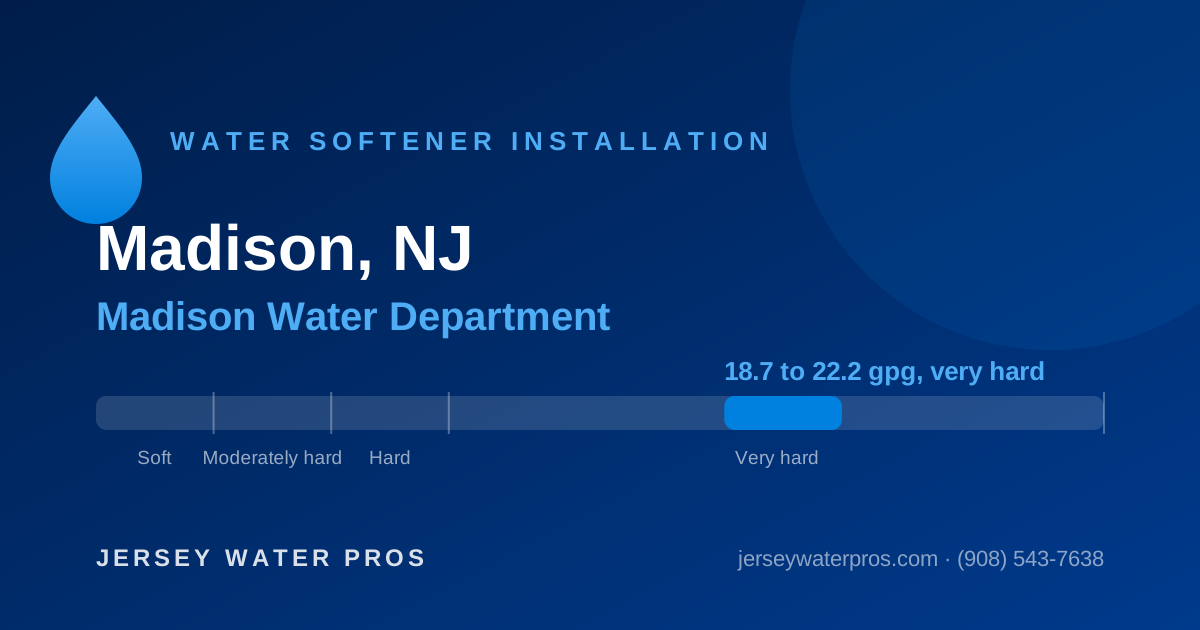
18.7 to 22.2 grains per gallon, very hard
County
Morris County
Water softener installation in Madison, NJ starts with respect for the numbers, because the borough's own report puts its well water at 320 to 380 mg/L, roughly 19 to 22 grains per gallon and close to double the threshold for very hard water. This page covers how an install works in Madison, what that mineral load does to plumbing and appliances, where whole house filtration fits, and how pricing comes together. Jersey Water Pros is based nearby in Summit, and every installation is performed by licensed NJ master plumbers.
Madison water
What Madison homeowners are dealing with
Madison runs its own water department, and every drop starts under the borough. Five wells drilled into the Buried Valley Aquifer system (with capacities from 1.1 to 1.9 million gallons per day) feed two elevated tanks: the 500,000-gallon Madison Avenue tank and the 750,000-gallon Midwood Terrace tank. The borough can buy backup water from Florham Park, the Southeast Morris County MUA, or New Jersey American Water, but the day-to-day supply is Madison's own groundwater.
The borough's latest report says the water met all EPA and state drinking water standards. It is also, by the borough's own numbers, very hard: 320 to 380 mg/L, or roughly 19 to 22 grains per gallon. That is nearly double the 180 mg/L threshold for "very hard" on the USGS scale. The report also shows iron reaching 0.43 ppm (above the 0.3 ppm staining threshold at the high end) and dissolved solids topping the recommended 500 ppm limit in some samples. None of these are health violations. They are the reason Madison homes see scale, spots, and the occasional rusty tinge.
PFOA was detected at 6 to 8 ppt, below New Jersey's 14 ppt limit; PFOS was not detected. Lead testing found a 90th percentile of 2.55 ppb with no homes over the action level. If you want to know what your own tap shows, the borough's annual water quality report has the published numbers, and an NJDEP-certified lab test, which we can help arrange, produces official results for your own plumbing. The borough's report already makes the case plainly: this is serious softener territory, and Jersey Water Pros offers a free in-home estimate when you are ready to address it.
Very hard water, among the hardest in the area
Madison's borough water quality report lists total hardness of 320 to 380 mg/L (average 346), sampled in 2023. That converts to roughly 18.7 to 22.2 grains per gallon, which is very hard on the USGS scale and well above the 250 mg/L recommended upper limit the report cites. Heavy scale on fixtures, cloudy glassware, and shortened water heater life are the everyday symptoms.
Iron at the top of the secondary limit
The same report lists iron from ND to 0.43 ppm, with the high end above the 0.3 ppm secondary standard for staining and taste. Iron at these levels can leave orange-brown marks on laundry and fixtures. Manganese, by contrast, tested very low (ND to 0.004 ppm).
Elevated dissolved solids and chloride
Total dissolved solids ranged from 404 to 537 ppm, with the top of the range above the 500 ppm recommended limit, and chloride ranged from 94 to 160 ppm. Neither is a health standard, but both track with the mineral-heavy character of the borough's well water and can affect taste.
PFOA detected below the state limit
2024 testing found PFOA at 6 to 8 ppt against New Jersey's 14 ppt MCL, with no violation. PFOS and PFNA were not detected. For homeowners who want further reduction, systems certified to NSF/ANSI standards for reduction of PFOA and PFOS are an option.
Water softener installation in Madison
Madison's water is hard enough that installation details matter more than they do in most towns. At roughly 19 to 22 grains per gallon by the borough's own report, an undersized or poorly placed softener will regenerate constantly and still let scale through. So the job starts with a free quote visit from a licensed NJ master plumber who measures your household's fixtures and water use, checks the main shutoff and meter, and finds the right spot for the equipment, usually near where the service line enters the basement.
Like the rest of New Jersey, Madison falls under the state's Uniform Construction Code, so tying a softener into your potable plumbing generally requires a plumbing permit filed with the borough's construction office. We prepare the permit, do the work to code, and schedule the inspection, so the paperwork rides along with the job instead of landing on you.
The tie-in point is the main line after the meter, ahead of the branch to your water heater, because the heater is where 20 grain water does its most expensive damage. The unit needs a drain for regeneration and a standard outlet. In older Madison homes, especially near downtown, utility spaces can be compact, so we sometimes reroute a short run of pipe to make the softener, brine tank, and any filtration equipment fit cleanly and stay serviceable.
Most installations finish in one working day, with water off for only part of it. The schedule we quote includes permit timing, which varies with the construction office calendar.
Madison hard water problems we fix
Start with the borough's published numbers, because they explain nearly every complaint we hear in Madison. Total hardness tested at 320 to 380 mg/L, averaging 346, which converts to about 18.7 to 22.2 grains per gallon. The USGS calls anything over 180 mg/L very hard; Madison's wells run close to double that. Iron reached 0.43 ppm at the top of its range, above the 0.3 ppm level where staining starts. Dissolved solids ran 404 to 537 ppm and chloride 94 to 160 ppm, both of which shape taste.
In a Madison home, that chemistry shows up as:
- Thick white scale on faucets, showerheads, and around drains
- Orange-brown tinges on laundry and porcelain when iron runs at the high end
- Water heaters that rumble, lose efficiency, and fail early under mineral load
- Dishwashers and coffee makers that clog with deposits
- Soap that rinses poorly, leaving film on skin, hair, and shower glass
None of this is a health violation, and the borough's report says the water met all standards. It is a comfort and cost problem, and it is solvable. A properly sized water softener removes the calcium and magnesium driving the scale, and where iron tests near the top of the borough's range, we spec equipment rated to handle it rather than letting it foul the resin. Your own tap's numbers come from the borough's annual water quality report or an NJDEP-certified lab test, which we can help arrange.
Whole house water filtration in Madison
A softener fixes minerals, but Madison homeowners usually raise two other topics: taste and PFAS. On taste, the mineral-heavy character of the wells, with dissolved solids sometimes above the 500 ppm recommended limit, gives some taps a flat or mineral taste. A whole house carbon filtration system polishes taste and odor at every faucet, and a reverse osmosis unit at the kitchen sink goes further, cutting dissolved solids so drinking and cooking water tastes noticeably crisper than the tap.
On PFAS, Madison's results sit below state limits: PFOA tested at 6 to 8 ppt against New Jersey's 14 ppt MCL, and PFOS and PFNA were not detected. That is documented compliance in the borough's report. Households that want an added margin anyway should shop by certification, choosing systems certified under NSF/ANSI standards for PFOA and PFOS reduction, either carbon based or reverse osmosis.
Lead results in Madison are low, with a 90th percentile of 2.55 ppb and no homes over the action level. If your home is older and you want certainty about your own plumbing, only an NJDEP-certified lab produces official results, and we can help arrange that test. Our advice for water filtration in Madison is the same as everywhere: let the borough's published data and your own lab numbers pick the equipment, and insist on certified hardware.
What water treatment costs in Madison
Madison sits at the demanding end of the sizing chart for one honest reason: capacity. A softener that would coast in a town with 7 grain water has to work roughly three times harder here, so Madison installs usually call for larger resin volumes or higher efficiency valves, and that is reflected in equipment price. We will not quote invented numbers on a website; the figure that matters is the one on a written quote for your house.
Beyond capacity, three things move the price. First, iron: if your tap tests near the top of the borough's published range, the spec changes to protect the resin bed. Second, scope: a softener only, a softener plus whole house carbon filtration, or a drinking water reverse osmosis unit added at the sink are different projects. Third, the site itself: a clear basement wall near the meter, a drain, and an outlet keeps labor simple, while tight utility rooms in older homes can take extra piping.
Permit fees are set by the borough's construction office and pass through at cost. The free quote works like this: a licensed NJ master plumber visits, confirms your numbers against the borough report or a certified lab test we help arrange, measures the space, and gives you a written price for a specific system with permit and inspection included. You can hold that quote against any competitor's, line by line.
What we install in Madison
Jersey Water Pros is based in Summit and installs across Morris County, with every job performed by a licensed NJ master plumber.
Water quality varies by street and season. Only a NJDEP-certified lab can produce official results for your own tap.
FAQ
Madison water questions
How hard is the water in Madison, NJ?
Very hard. The borough's own water quality report lists total hardness of 320 to 380 mg/L (average 346), which converts to roughly 19 to 22 grains per gallon. The USGS calls anything over 180 mg/L very hard, so Madison's well water is roughly double that threshold. This is why scale buildup on fixtures and water heaters is so common in town.
Where does Madison's water come from?
Five borough-owned wells drawing from the Buried Valley Aquifer system, with capacities from 1.1 to 1.9 million gallons per day. The wells feed two elevated tanks: 500,000 gallons on Madison Avenue and 750,000 gallons on Midwood Terrace. The borough can also purchase backup water from Florham Park, the Southeast Morris County MUA, or NJ American Water.
Does Madison's water have iron in it?
The borough's report lists iron from non-detect to 0.43 ppm in 2023 sampling. The high end is above the 0.3 ppm secondary standard, which is the level where orange-brown staining on laundry and fixtures can start. Iron is an aesthetic issue, not a health standard, and it varies by well and by street. The borough's annual water quality report shows the systemwide range, and an NJDEP-certified lab test, which we can help arrange, shows what your own tap is getting.
Do I need a permit to install a water softener in Madison?
Generally yes. New Jersey's Uniform Construction Code covers work that ties into a home's potable plumbing, so a water softener install in Madison typically requires a plumbing permit filed with the borough's construction office, followed by an inspection. Jersey Water Pros prepares the permit and schedules the inspection as part of every installation, so the paperwork is handled for you.
How long does water softener installation take in Madison?
The install itself is usually done in one working day, with your water off for only part of it. The full timeline from signed quote to inspected system depends mostly on permit processing at the borough's construction office, which varies with its calendar. We give you a specific schedule with your written quote.
Which water softener is right for Madison's very hard water?
One sized for it. At roughly 19 to 22 grains per gallon by the borough's report, Madison homes generally need higher capacity units than neighboring towns, and iron testing up to 0.43 ppm can change the spec further, since iron can foul standard softener resin. The free quote visit sizes the system from your household's use and your tap's numbers, drawn from the borough's annual water quality report or an NJDEP-certified lab test we can help arrange.
Service area
Where we work in Madison
We install water softeners and whole house filtration across Madison and the surrounding Morris County towns.
Ready to fix your water in Madison?
Get a straight written quote from a local pro. If your water's fine, we'll tell you that too.