
Water Softener Installation in Cranford, NJ
Softeners, whole house filtration, and licensed plumber installs for Cranford homes, matched to what’s actually in Cranford’s water.
Water source
New Jersey American Water, Raritan System 1 (PWSID NJ2004002)
Typical hardness
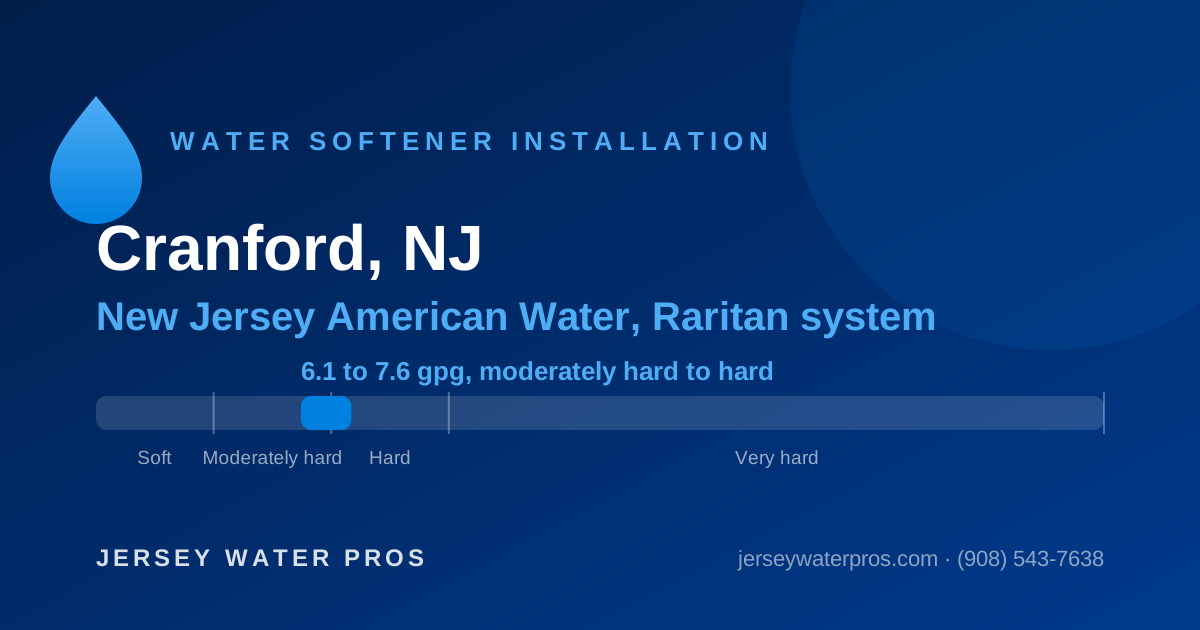
6.1 to 7.6 grains per gallon, moderately hard to hard
County
Union County
Water softener installation in Cranford, NJ starts from a known quantity: New Jersey American Water's figures for this part of the Raritan system put hardness at 6.1 to 7.6 grains per gallon, moderately hard to hard, and steady enough to plan around. This page lays out the rest for Cranford homeowners: how an install actually proceeds in the township's older homes, the hard water symptoms worth fixing, where whole house filtration fits alongside a softener, and how cost comes together before you request a free quote from our licensed NJ master plumbers.
Cranford water
What Cranford homeowners are dealing with
Cranford's drinking water comes from New Jersey American Water's Raritan system, the former Elizabethtown Water network that serves much of Union County. Per the utility's typical water quality sheet for this service area, the water is drawn from seven intakes on the Raritan River, the Millstone River, and the Delaware & Raritan Canal before being treated and pumped north to towns like Cranford.
The utility's typical water quality sheet for this part of the system puts hardness at 104 to 130 mg/L, roughly 6.1 to 7.6 grains per gallon (moderately hard to hard on the USGS scale). Disinfection here is by chloramine, which reads as a chlorine-like taste to many people. The 2025 annual report shows the system met all state and federal standards, with PFOA and PFOS detected below New Jersey's limits.
Cranford homeowners have seen the lead service line program up close: the township posted notices that the utility's contractor was digging 136 test holes around town in early 2026 to identify service line materials, ahead of replacements that state law requires by 2031. If you are unsure what is in your own water, start with the utility's annual water quality report; only NJDEP-certified lab results are official, and we can help arrange a lab test. Jersey Water Pros offers a free in-home estimate if you are considering treatment.
Hardness and scale
The utility's typical water quality sheet for Raritan System 1, which lists Cranford ZIP code 07016, shows total hardness of 104 to 130 mg/L as CaCO3, about 6.1 to 7.6 grains per gallon. That level leaves scale in water heaters, on showerheads, and on dishes over time.
Lead service line identification underway in town
Cranford Township announced that New Jersey American Water's contractor Con Quest, Inc. was digging 136 test holes around Cranford in January and February 2026 to identify water service line materials, part of the Lead Service Line Replacement Program; New Jersey law requires lead and galvanized lines be replaced by 2031. System-wide, the 2024 inventory reported by the Jersey WaterCheck database lists 7,449 known lead lines and about 103,052 unknown-material lines.
Chloramine taste and a 2024 taste-and-odor event
The part of the Raritan system serving Cranford disinfects with chloramines (0.7 to 1.2 mg/L monthly averages in the distribution system per the utility's typical water quality sheet). In December 2024, a spill of the fragrance compound alpha-pinene from a facility in Branchburg caused system-wide taste and odor complaints; the utility and NJDEP reported finished water continued to meet standards while the system was flushed.
PFAS detected below state limits
The 2025 annual report for the Raritan system lists PFOA at up to 7 ppt (NJ MCL 14) and PFOS at up to 6 ppt (NJ MCL 13), in compliance. Systems certified to NSF/ANSI standards for PFOA/PFOS reduction are an option for homeowners who want an added margin.
Water softener installation in Cranford
The process in Cranford begins with a free quote visit from a licensed New Jersey master plumber. We find the point where the water line enters the house, confirm there is a workable drain and outlet, and check the condition of the plumbing around the meter. The softener ties in on the main line after the meter so the water heater and every fixture receive softened water, with a bypass valve so the system can be serviced without shutting the house down. Outdoor spigots typically stay on untreated water.
Much of Cranford's housing dates to the first half of the 1900s, and some of those basements have dealt with storm water over the years. Where a basement has flooded before, we plan for it: equipment can be set on risers, the drain line routed with backups in mind, and the electrical connection kept above past water lines. It is a small planning step that saves real money later.
Because the work opens your supply line, it requires a plumbing permit under New Jersey's Uniform Construction Code, filed with the Township of Cranford's construction office. We prepare the filing and coordinate the inspection that follows. The installation itself normally takes a few hours to one day, ending with the unit programmed to Cranford's published hardness numbers and a walkthrough of salt, settings, and what maintenance actually involves, which is not much.
Cranford hard water problems we fix
Cranford's 6.1 to 7.6 grains per gallon will not destroy a water heater in a year, and that is exactly why it gets ignored. At this level the damage is quiet. Minerals drop out of the water each time it is heated, so the bottom of a tank water heater slowly fills with sediment that makes the burner run longer, and a tankless unit's heat exchanger narrows a little more each season. The visible signs around the house are familiar: spots on glassware, white buildup around faucet aerators, film on the shower door that returns two days after you scrub it.
Hard water also works against everything soap touches. It binds with detergent before the detergent can do its job, so dishwashers and washing machines use more product for a worse result, towels stiffen, and skin rinses off feeling dry. Most Cranford households have simply gotten used to this, because 6 to 7 grains is enough to cause all of it without being dramatic enough to force the issue.
A metered water softener sized to your household removes the calcium and magnesium at the point of entry, and the symptoms stop accumulating from that day. Capacity here does not need to be extreme. Cranford's hardness is steady, so the sizing is a straightforward calculation from your household's daily water use, which we run with you during the free quote.
Whole house water filtration in Cranford
The taste many Cranford homeowners describe as chlorine is actually chloramine, the disinfectant this part of the Raritan system uses, present at monthly average residuals of 0.7 to 1.2 mg/L in the distribution pipes. Chloramine keeps water safe on its way to you, but nothing requires you to drink the taste. Whole house filtration with catalytic carbon removes it at the point of entry, and installing carbon ahead of a softener also shields the softener's resin, which disinfectants slowly degrade. The December 2024 taste and odor event on the Raritan system made a broader point as well: what your tap tastes like can change with the source water, and a whole house carbon system gives your home a buffer.
On PFAS, the system's 2025 annual report lists PFOA at up to 7 ppt and PFOS at up to 6 ppt, below New Jersey's limits of 14 and 13. Homeowners who want an extra margin should look specifically for certification to NSF/ANSI standards for PFOA and PFOS reduction, at the whole house or with a reverse osmosis unit at the sink.
Lead is on people's minds here too. The utility's contractor dug test holes around Cranford in early 2026 to identify service line materials, part of the statewide push to replace lead and galvanized lines by 2031. The system's lead sampling met compliance in the latest report, but until your own line is confirmed, a drinking-tap filter certified to NSF/ANSI 53 for lead reduction is a reasonable interim measure. Your area's full numbers are in the utility's annual water quality report, and an NJDEP-certified lab, which we can help arrange, is the official route for your own tap.
What water treatment costs in Cranford
Cranford's steady hardness makes softener sizing predictable, which keeps the equipment side of the estimate tighter than in towns where hardness swings. What moves the number in Cranford is mostly the install itself: where the main line enters, how far the unit sits from a drain and outlet, whether older pipe near the meter needs work while it is open, and whether flood-conscious placement calls for risers or rerouting. Permit fees are set by the Township of Cranford and pass through at cost.
We do not quote from a price sheet over the phone, and we do not run countertop water demonstrations as a sales device. Cranford's hardness and disinfectant numbers are published by the utility, and questions about lead or PFAS at your own tap belong with an NJDEP-certified lab, which we can help arrange. Quoting from real numbers keeps the recommendation honest, and New Jersey's consumer protection laws are one more reason we like it that way.
The free quote itself is simple. A licensed NJ master plumber visits your home, inspects the tie-in and drain options, asks what you want fixed, whether that is scale, taste, or both, and leaves you a written quote that itemizes equipment, labor, and permit costs. There is no obligation, and the visit usually takes under an hour.
What we install in Cranford
Jersey Water Pros is based in Summit and installs across Union County, with every job performed by a licensed NJ master plumber.
Water quality varies by street and season. Only a NJDEP-certified lab can produce official results for your own tap.
FAQ
Cranford water questions
How hard is the water in Cranford?
New Jersey American Water's typical water quality sheet for this part of the Raritan system lists 104 to 130 mg/L as CaCO3, about 6.1 to 7.6 grains per gallon (the utility rounds it to 6 to 7). That is moderately hard to hard on the USGS scale.
Why is New Jersey American Water digging test holes in Cranford?
Cranford Township announced that the utility's contractor, Con Quest Inc., was digging 136 test holes around town in January and February 2026 to identify what water service lines are made of. Lines found to be lead or galvanized steel must be replaced by 2031 under New Jersey law, and the utility says it replaces customer-owned lead lines at no direct charge to the customer through the program.
Who supplies Cranford's water?
Cranford is served by New Jersey American Water's Raritan system, the successor to Elizabethtown Water. Per the utility's water quality sheet for this area, source water comes from intakes on the Raritan River, Millstone River, and the Delaware & Raritan Canal. The system's 2025 annual report shows it met state and federal drinking water standards.
Do I need a permit to install a water softener in Cranford?
Yes. A new softener installation opens your home's supply line, which is plumbing work requiring a permit under New Jersey's Uniform Construction Code, filed with the Township of Cranford's construction office. Jersey Water Pros prepares the filing, a licensed NJ master plumber performs the installation as the code requires, and the township inspects the finished work.
How long does a water softener installation take in Cranford?
Plan on a few hours to one day for the physical work: cutting in the bypass, setting the unit, connecting the drain, and programming the system for Cranford's published 6.1 to 7.6 grains per gallon. Permit filing and the township inspection add calendar days around the install itself. If your basement calls for flood-conscious placement on risers, that is handled within the same visit.
Which water softener should a Cranford home get?
Because Cranford's hardness is steady at 6.1 to 7.6 grains per gallon, most homes do well with a standard metered softener sized from the household's daily water use. Since this part of the Raritan system disinfects with chloramine, many homeowners pair the softener with carbon filtration for taste and to protect the softening resin, and some add a reverse osmosis unit at the kitchen sink for drinking water. The free quote works through which pieces your home actually needs.
Service area
Where we work in Cranford
We install water softeners and whole house filtration across Cranford and the surrounding Union County towns.
Ready to fix your water in Cranford?
Get a straight written quote from a local pro. If your water's fine, we'll tell you that too.