Water Softener Installation in Livingston, NJ
Softeners, whole house filtration, and licensed plumber installs for Livingston homes, matched to what’s actually in Livingston’s water.
Water source
Township of Livingston Division of Water (PWSID NJ0710001)
Typical hardness
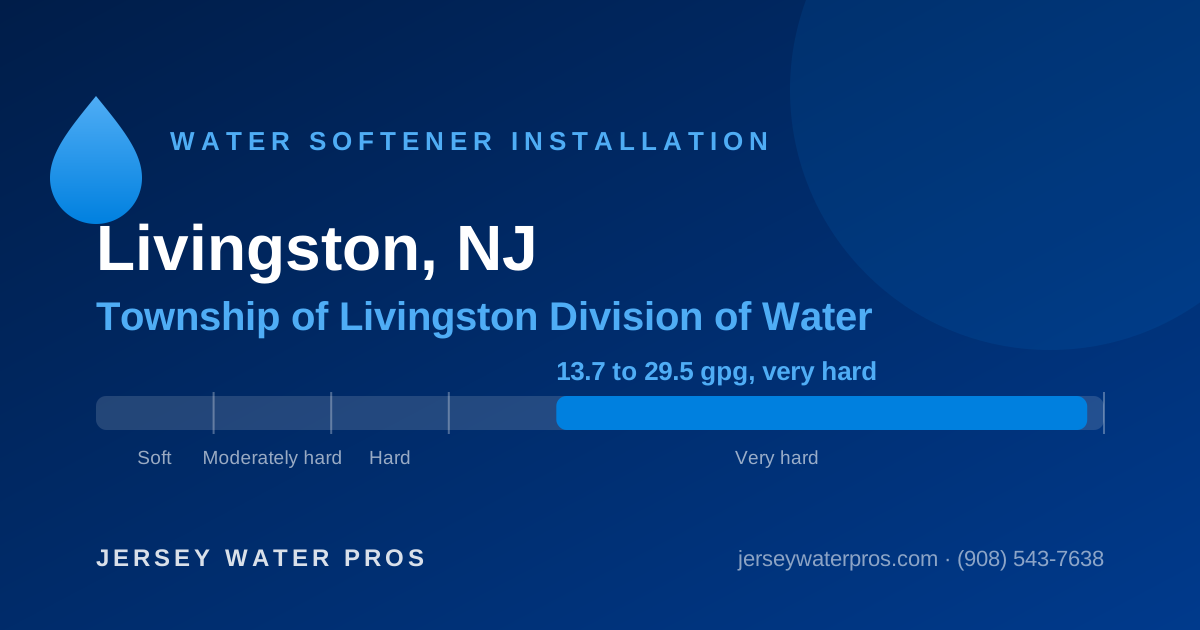
13.7 to 29.5 grains per gallon, very hard
County
Essex County
Water softener installation in Livingston, NJ starts with the township's own numbers, and they are blunt: well water averaging 19.4 grains per gallon in 2024, with samples up to 29.5, plus an ongoing PFOA violation the township says will stand until treatment is installed at the affected wells. This page covers how an install works in Livingston, what that water does to homes, where certified filtration fits while the municipal fix proceeds, and how pricing comes together. Jersey Water Pros is based in Summit, and every installation is performed by licensed NJ master plumbers.
Livingston water
What Livingston homeowners are dealing with
Livingston runs its own water system (PWS ID NJ0710001). Supply comes from fourteen township wells in the Buried Valley Aquifer, supplemented by water purchased from New Jersey American Water's Short Hills system and the East Orange Water Commission. Groundwater systems like this tend to run hard, and Livingston's numbers bear that out: the 2025 report lists an average of 332 ppm (19.4 grains per gallon) from the wells, with samples up to 29.5 grains. The report itself flags hardness, chloride, and sodium as exceeding the state's recommended upper limits.
The bigger disclosure in the report is an ongoing PFOA violation. The running annual average at affected wells reached 23.78 ppt against New Jersey's 14 ppt limit, and the township states the violation will remain open until treatment is installed at those facilities. Customers have been receiving the required quarterly notices. For homeowners who want a treatment barrier at the tap in the meantime, systems certified to NSF/ANSI standards for PFOA/PFOS reduction are the appropriate category to look at.
The township's annual water quality report is the place to start for Livingston's numbers, and sizing a softener correctly for water this hard is exactly what a free in-home estimate from Jersey Water Pros covers. PFAS and lead can only be confirmed through an NJDEP-certified laboratory, and we can help arrange that testing.
Some of the hardest municipal water in the area
Livingston's 2025 water quality report lists carbonate hardness from the township's wells at an average of 332 ppm (19.4 grains per gallon), with a range of 234 to 505 ppm (13.7 to 29.5 gpg) in 2024. That exceeds the state's 250 ppm recommended upper limit, and the report marks it as not achieved. Water purchased from the East Orange Water Commission tested even harder, at 442 ppm (25.8 gpg) in the report's most recent listed result.
Ongoing PFOA MCL violation
The township's report discloses an ongoing PFOA violation: the running annual average at affected wells reached 23.78 ppt against New Jersey's MCL of 14 ppt, with a highest single result of 27.6 ppt in 2024. The report states the violation will not be resolved until treatment is installed at the affected facilities. Quarterly violation notices have been issued to customers, and one well (Well 10) is no longer in use.
Chloride and sodium above recommended limits
In 2024, chloride reached 322 ppm against a 250 ppm recommended upper limit, and sodium reached 60.4 ppm against a 50 ppm limit; both are marked as not achieved in the township's report. The report notes sodium levels above the recommended limit may be of concern to individuals on sodium-restricted diets.
Lead in some home plumbing
In 2024 tap sampling, Livingston's 90th-percentile lead result was 4.26 ppb (below the 15 ppb action level), but one sample exceeded the action level, with results ranging up to 38.6 ppb. The township maintains a lead service line inventory online and offers guidance on identifying service line materials.
Water softener installation in Livingston
Livingston installs are sizing exercises first. The township's wells averaged 19.4 grains per gallon in 2024, with samples up to 29.5, and purchased East Orange Water Commission supply tested at about 25.8 grains, harder than the well average, so equipment has to be specified for genuinely very hard water, not a suburban average. During the free quote visit, a licensed NJ master plumber checks your meter and main shutoff, measures household water use, and confirms your street's numbers from the township's annual report or a certified lab test we help arrange.
Permits follow the same path as everywhere in New Jersey: the Uniform Construction Code generally requires a plumbing permit for tying treatment equipment into potable plumbing, filed here with Livingston's construction department. We handle the filing and schedule the required inspection when the work is done.
The softener ties in at the main line after the meter, before the water heater branch, typically in the basement or utility area. The unit needs a drain for regeneration and a standard outlet, and at Livingston's hardness levels we pay particular attention to valve efficiency, because a softener working on water near 20 grains regenerates often and salt efficiency compounds over years. Homes with irrigation get the sprinkler line plumbed off the hard side so softened water is not sprayed on the lawn.
Most installations are finished in a single working day. Permit review time varies with the township's calendar, and the timeline we quote accounts for it.
Livingston hard water problems we fix
Livingston's own report marks hardness as exceeding the state's 250 ppm recommended upper limit, and the numbers behind that are stark: an average of 332 ppm from the township wells, ranging from 234 to 505 ppm, or about 13.7 to 29.5 grains per gallon. Purchased East Orange Water Commission water tested at 442 ppm, about 25.8 grains, while purchased NJ American Water supply came in near 9.3 grains, so the blend reaching your street sets how fast the symptoms arrive.
They arrive all the same:
- Heavy scale on fixtures, showerheads, and shower glass
- Water heaters rumbling and failing years early under mineral load
- White crust in kettles, coffee makers, and dishwashers
- Soap that will not rinse clean, with dry skin and dull laundry
The report also lists chloride at up to 322 ppm and sodium reaching 60.4 ppm, both above their recommended upper limits, which affects taste and matters for sodium-restricted diets. A standard softener exchanges hardness for a small amount of added sodium, so in Livingston we often talk through potassium chloride operation or a reverse osmosis drinking tap for households watching sodium.
This is the rare town where the utility's own paperwork makes the case for softening without any salesmanship. What remains is matching capacity to your tap: the township's annual water quality report gives the ranges, and an NJDEP-certified lab test, which we can help arrange, gives the single number a system should be built on.
Whole house water filtration in Livingston
Livingston is the one town on this list where PFAS is not a background topic. The township's report discloses an ongoing PFOA violation: a running annual average of 23.78 ppt at affected wells against New Jersey's 14 ppt limit, with a highest single result of 27.6 ppt in 2024. The township has taken Well 10 out of use, issues the required quarterly notices, and states the violation will remain open until treatment is installed at the affected facilities.
For a homeowner deciding what to do at the tap while that municipal work proceeds, certification is the standard that matters. Activated carbon systems and reverse osmosis units certified under NSF/ANSI standards for PFOA and PFOS reduction are tested against those specific compounds. A whole house carbon system addresses every tap, while a certified reverse osmosis unit at the kitchen sink covers the water your family drinks and cooks with. We install both, and we are direct about the fact that this is a homeowner's optional barrier, not a substitute for the township's required fix.
Filtration earns its keep on ordinary grounds too: carbon improves disinfectant taste and odor, and reverse osmosis cuts the dissolved solids behind Livingston's elevated chloride readings. On lead, 2024 sampling showed a 90th percentile of 4.26 ppb with one sample over the action level at up to 38.6 ppb, and the township posts its service line inventory online. Official results for your own tap come only from an NJDEP-certified lab, and we can help arrange that test.
What water treatment costs in Livingston
Two honest points frame water treatment costs in Livingston. First, capacity: softening water that averages over 19 grains and has tested near 29 takes more resin, better valves, and smarter regeneration than softening the 7 grain water common elsewhere in the area, so equipment for Livingston is specified, and priced, above entry level. Second, scope: with an open PFOA violation on the municipal system, many households here pair a softener with certified PFAS reduction equipment, and that combination costs more than either piece alone. We would rather explain those drivers than publish invented numbers.
The rest of the price comes from the site and the paperwork. A basement with the meter, a drain, and an outlet in easy reach keeps labor contained; long pipe runs or finished spaces add work. Permit fees are set by the township's construction department and pass through at cost.
The free quote turns all of this into a real number. A licensed NJ master plumber visits, confirms your hardness and any PFAS questions against the township's report or an NJDEP-certified lab test we help arrange, measures the install space, and writes up a price for a specific system, permit and inspection included. There is no charge and no obligation for the visit, and the quote is itemized so you can compare it fairly against any other bid.
What we install in Livingston
Jersey Water Pros is based in Summit and installs across Essex County, with every job performed by a licensed NJ master plumber.
Water quality varies by street and season. Only a NJDEP-certified lab can produce official results for your own tap.
FAQ
Livingston water questions
How hard is the water in Livingston?
Very hard. The township's 2025 water quality report lists carbonate hardness from Livingston's wells at an average of 19.4 grains per gallon, ranging from 13.7 to 29.5 grains in 2024. Anything over about 10.5 grains is very hard on the USGS scale, so most Livingston homes see heavy scale without a softener.
Does Livingston's water have PFAS in it?
The township's 2025 report discloses an ongoing PFOA violation: the running annual average at affected wells reached 23.78 ppt against New Jersey's 14 ppt limit. The township states this will be resolved once treatment is installed at the affected wells. Point-of-use systems certified to NSF/ANSI standards for PFOA/PFOS reduction can add a barrier at your tap; official water results come only from NJDEP-certified labs.
Where does Livingston's water come from?
Fourteen township wells drawing from the Buried Valley Aquifer, plus purchased water from New Jersey American Water's Short Hills system and the East Orange Water Commission. The purchased NJAW water tested softer (9.3 grains per gallon in the report) than the township's own wells (19.4 average), so hardness at your tap depends partly on which blend reaches your street.
Do I need a permit to install a water softener in Livingston?
Generally yes. Under New Jersey's Uniform Construction Code, tying a softener or filtration system into potable plumbing typically requires a plumbing permit through Livingston's construction department, with an inspection after the work. Jersey Water Pros files the permit and schedules the inspection as part of every install.
How long does a water softener install take in Livingston?
Most installs are completed in one working day, with water off for only part of it. Livingston's very hard water changes the equipment specification, not the install length. The full timeline from signed quote to inspected system depends mostly on permit processing at the township, and we give you a specific schedule with your written quote.
Which system handles Livingston's water?
A high capacity softener sized to your tested hardness is the foundation, since township wells averaged 19.4 grains per gallon in 2024 and some purchased supply tested near 26. Given the township's open PFOA violation, many homeowners add a reverse osmosis unit or carbon system certified under NSF/ANSI standards for PFOA and PFOS reduction at the kitchen tap. Households watching sodium can run the softener on potassium chloride. Because the supply blend varies by street, we size from the township's annual report or an NJDEP-certified lab test we can help arrange.
Service area
Where we work in Livingston
We install water softeners and whole house filtration across Livingston and the surrounding Essex County towns.
Ready to fix your water in Livingston?
Get a straight written quote from a local pro. If your water's fine, we'll tell you that too.