Water Softener Installation in Watchung, NJ
Softeners, whole house filtration, and licensed plumber installs for Watchung homes, matched to what’s actually in Watchung’s water.
Water source
Utility + wells
Typical hardness
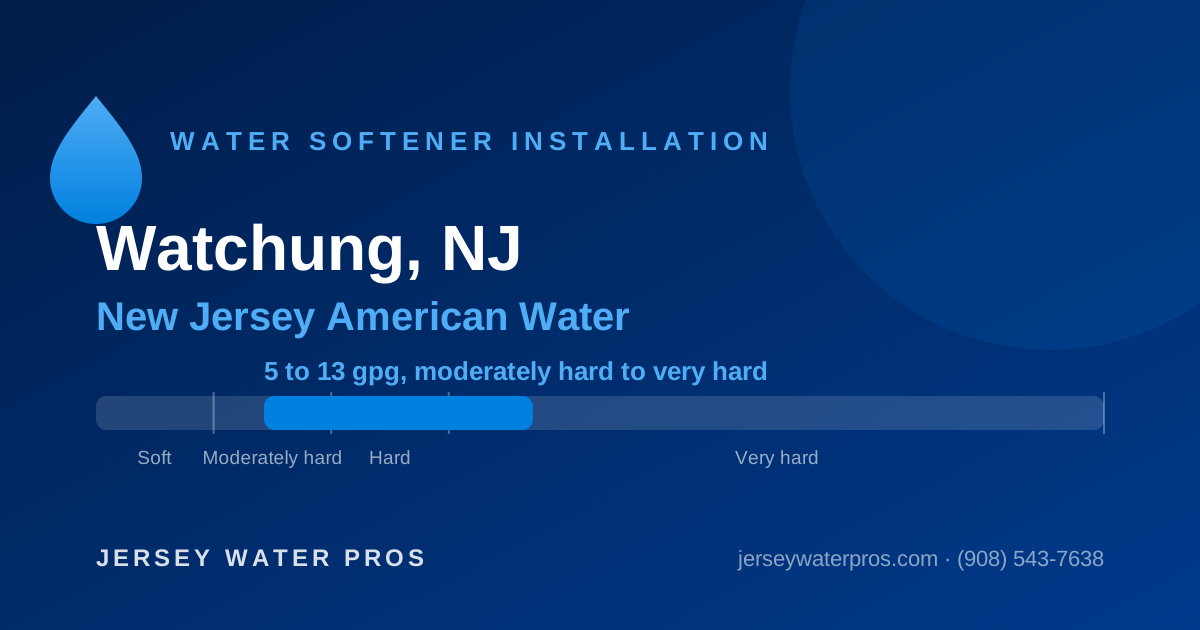
5 to 13 grains per gallon, moderately hard to very hard
County
Somerset County
Water softener installation in Watchung, NJ has an extra step most neighboring towns skip: figuring out which water you are actually on. Most of the borough is served by New Jersey American Water's Raritan system, but some properties rely on private wells, and the answer changes how a softener is sized, where it is placed, and what testing makes sense first. This page walks through the installation process for both situations, the hard water problems we see across the borough, the role of whole house filtration, and how the free quote works.
Watchung water
What Watchung homeowners are dealing with
Most Watchung homes get their water from New Jersey American Water's Raritan system (PWS ID NJ2004002), the former Elizabethtown Water territory, which serves about 737,000 people from intakes on the Raritan River, Millstone River, and Delaware & Raritan Canal plus approximately 98 wells. Surface supplies in the system are treated with chloramines, which some homeowners notice as a persistent chlorine-like taste. The utility's typical-quality sheets put hardness at 90 to 222 mg/L, about 5 to 13 grains per gallon, depending on the blend.
Not every Watchung property is on utility water. The borough's Board of Health code regulates individual and semipublic wells, and homes on wells fall under New Jersey's Private Well Testing Act when they are sold or leased. Well owners are responsible for their own water quality; there is no annual utility report covering those taps.
The Raritan system's 2025 report lists PFOA and PFOS below current New Jersey limits, a lead 90th-percentile result of 2 ppb with zero homes above the action level in 2025 sampling, and sodium from 32 to 99 ppm against a 50 ppm recommended upper limit. To learn your own numbers, start with the utility's annual water quality report if you are on city water, or an NJDEP-certified lab test if you are on a well; we can help arrange that testing. Jersey Water Pros also offers a free in-home estimate for treatment on either supply.
Hardness that varies by neighborhood
Watchung is served by NJ American Water's Raritan system, which blends approximately 98 wells with seven intakes on the Raritan River, Millstone River, and Delaware & Raritan Canal. The utility's published typical water quality sheets for the Raritan system list total hardness of 90 to 222 mg/L, about 5 to 13 grains per gallon, with the surface-water-fed zone at 104 to 130 mg/L, about 6 to 7 grains. Which blend reaches your street determines how much scale you see.
PFAS detected below current NJ limits
The Raritan system's 2025 annual report lists PFOA at a highest running annual average of 7 ppt (range ND to 7 ppt) against New Jersey's 14 ppt MCL, and PFOS at 6 ppt (ND to 6 ppt) against 13 ppt. The system is compliant with current state limits. Federal limits for PFOA and PFOS carry an April 2029 compliance deadline, though EPA has proposed allowing systems to request an extension to 2031.
Private and semipublic wells in parts of the borough
Watchung's Board of Health code (Chapter BH11, Water Supply, Individual and Semipublic) requires a Board of Health permit before any individual or semipublic water supply is located, constructed, or altered, a sign that some borough properties rely on individual wells rather than utility water. New Jersey's Private Well Testing Act requires well water testing when such properties are sold, and every five years for leased properties.
December 2024 taste-and-odor event on the Raritan system
In December 2024, alpha-pinene, a fragrance compound detectable by smell at extremely low concentrations, leaked from a repackaging facility in Branchburg and entered the Raritan system's source water, causing taste and odor complaints across more than 60 municipalities served by the system. The utility reported that finished water continued to meet state and federal primary drinking water standards throughout the event.
Water softener installation in Watchung
Installation in Watchung starts with a supply check. On utility water, the softener ties into the main line just after the meter, ahead of the water heater, usually in the basement or utility room. On a private well, it goes in after the pressure tank, and the order of equipment matters: sediment filtration and any iron treatment come before the softener so the resin is protected. Watchung's hillside lots sometimes put mechanicals in walkout basements or garages, which rarely changes the job, only where we stage it.
Two kinds of paperwork can apply here. Plumbing alterations generally require a construction permit under New Jersey's Uniform Construction Code, filed with the borough. Separately, Watchung's Board of Health code regulates individual and semipublic water supplies, so work that alters a well system itself involves the Board of Health. Installing treatment on your house plumbing is normally the construction-permit side of that line, and we sort out the filings so you do not have to.
Timeline: the physical installation at most homes is a single day. Well homes sometimes take longer when pretreatment is involved, and every job carries permit review and inspection scheduling on the borough's calendar. Every installation is performed by a licensed New Jersey master plumber, and we test the setup, set the regeneration schedule to your measured hardness, and walk you through the controls before we leave.
Watchung hard water problems we fix
On the utility side, Watchung water arrives from a system that blends surface water intakes with roughly 98 wells, and the published hardness figures span about 5 to 13 grains per gallon depending on the blend. That is enough to scale water heaters, spot glassware, crust showerheads, and stiffen laundry, with the severity depending on which end of the range reaches your street.
Private well homes are a different conversation. A well in the Watchung hills is not covered by any utility report, so there is no published number to look up. Hardness, iron, manganese, and pH vary from property to property, and the only way to know is testing. New Jersey requires well testing at the point of sale under the Private Well Testing Act, but between sales, years can pass with no data. The symptoms that bring well owners to us include:
- Heavy scale that returns quickly after descaling fixtures or the water heater.
- Orange or brown staining on tubs, toilets, and laundry, the signature of dissolved iron.
- Metallic taste or water that discolors after sitting.
For well homes we start with a test through an NJDEP-certified lab, which we can help arrange, because a softener sized without numbers is a guess and iron above what a softener tolerates calls for its own treatment stage. For utility homes, the annual water quality report plus a check of your own tap does the same work. Either way, the equipment is chosen to match measured water, not assumptions.
Whole house water filtration in Watchung
Watchung homes on the Raritan system draw from a supply whose surface water sources are treated with chloramines, and that persistent disinfectant taste is the most common filtration complaint we hear. Whole house carbon filtration, using catalytic carbon where chloramine is the target, treats every tap and shower at once. The December 2024 taste and odor event on this system, when a fragrance compound entered the source water and was noticeable across the service area even though the finished water met standards, showed why some area homeowners add carbon polishing at home as a buffer against whatever the river sends next.
On documented detections, the system's latest report lists PFOA and PFOS below New Jersey's current limits, and lead sampling came in with a 90th percentile of 2 ppb, well under the action level. Compliance is not the same as zero, and households that want a wider margin can add filtration certified to NSF/ANSI standards for the specific claim, such as PFOA and PFOS reduction, at the whole house or drinking water tap level.
Private well owners face a different list. A private well is not chlorinated by a utility, so disinfectant taste is not the issue; instead, testing sometimes turns up iron, manganese, or other findings that shape a treatment train. That is why our filtration recommendations in Watchung always start from data: the utility's annual water quality report for city water, or an NJDEP-certified lab test we help arrange for wells, before any equipment is proposed.
What water treatment costs in Watchung
Watchung quotes vary more than most towns because the borough's split between utility water and private wells changes the scope of work. What moves the number:
- Supply type. Utility homes usually need softening and taste-focused filtration. Well homes sometimes need pretreatment stages, and testing determines that, not guesswork.
- Measured water quality. Hardness at the high end of the local range, or iron on a well, means more capacity or more stages.
- Household demand and plumbing layout. Bathrooms, occupants, and where the tie-in point sits.
- Permit fees set by the borough and passed through in the written quote.
We do not quote prices sight unseen, because a number given before the water is understood is a guess. The free quote works like this: we visit, inspect the plumbing and the supply setup, review whatever data exists, from the utility's annual report to prior lab results, and identify any testing worth doing through an NJDEP-certified lab before equipment is chosen. Then you receive a written price covering equipment, installation by a licensed New Jersey master plumber, permits, and startup. No charge for the visit and no obligation. We are based in Summit, a short drive over the ridge, and we service what we install.
What we install in Watchung
Jersey Water Pros is based in Summit and installs across Somerset County, with every job performed by a licensed NJ master plumber.
Water quality varies by street and season. Only a NJDEP-certified lab can produce official results for your own tap.
FAQ
Watchung water questions
Who supplies the water in Watchung?
Most of the borough is served by New Jersey American Water's Raritan system, the former Elizabethtown Water territory, which draws from the Raritan River, Millstone River, Delaware & Raritan Canal, and approximately 98 wells. Some properties in Watchung rely on private wells instead, which the borough's Board of Health regulates.
How hard is the water in Watchung?
New Jersey American Water's published typical figures for the Raritan system are 90 to 222 mg/L, about 5 to 13 grains per gallon, with the surface-water-fed zone typically at 6 to 7 grains. That spans moderately hard to very hard on the USGS scale. The utility's annual water quality report, or an NJDEP-certified lab test we can help arrange, is the way to pin down your street's actual number.
I have a private well in Watchung. What testing is required?
Watchung's Board of Health requires a permit before a well is constructed or altered, and New Jersey's Private Well Testing Act requires the water be tested when a property with a well is sold, and every five years if it is leased. Between transactions, testing is up to the owner. Only an NJDEP-certified lab can produce official results for things like arsenic, lead, or PFAS, and we can help arrange that testing.
What permits does a water softener installation need in Watchung?
Plumbing alterations generally require a construction permit filed with the borough under New Jersey's Uniform Construction Code. Separately, Watchung's Board of Health regulates individual and semipublic water supplies, so work on a well system itself involves a Board of Health permit. Treatment equipment on house plumbing is normally handled as a construction permit, and we manage the filings as part of the installation.
How long does a water softener installation take in Watchung?
Most homes are done in one day of onsite work. Private well homes can take longer when the plan includes pretreatment stages such as sediment or iron filtration. Add the borough's permit review and inspection scheduling, which we build into the timeline in your written quote.
Which system is right for Watchung's water?
On utility water, a softener sized to your measured hardness, often with carbon filtration for the chloramine taste, covers most homes. On a private well, the answer comes from a lab test first, because iron or other findings change the equipment order. We help arrange testing through an NJDEP-certified lab and size everything from your results, not a town average.
Service area
Where we work in Watchung
We install water softeners and whole house filtration across Watchung and the surrounding Somerset County towns.
Ready to fix your water in Watchung?
Get a straight written quote from a local pro. If your water's fine, we'll tell you that too.