Water Softener Installation in Short Hills, NJ
Softeners, whole house filtration, and licensed plumber installs for Short Hills homes, matched to what’s actually in Short Hills’s water.
Water source
New Jersey American Water, Short Hills system (PWSID NJ0712001)
Typical hardness
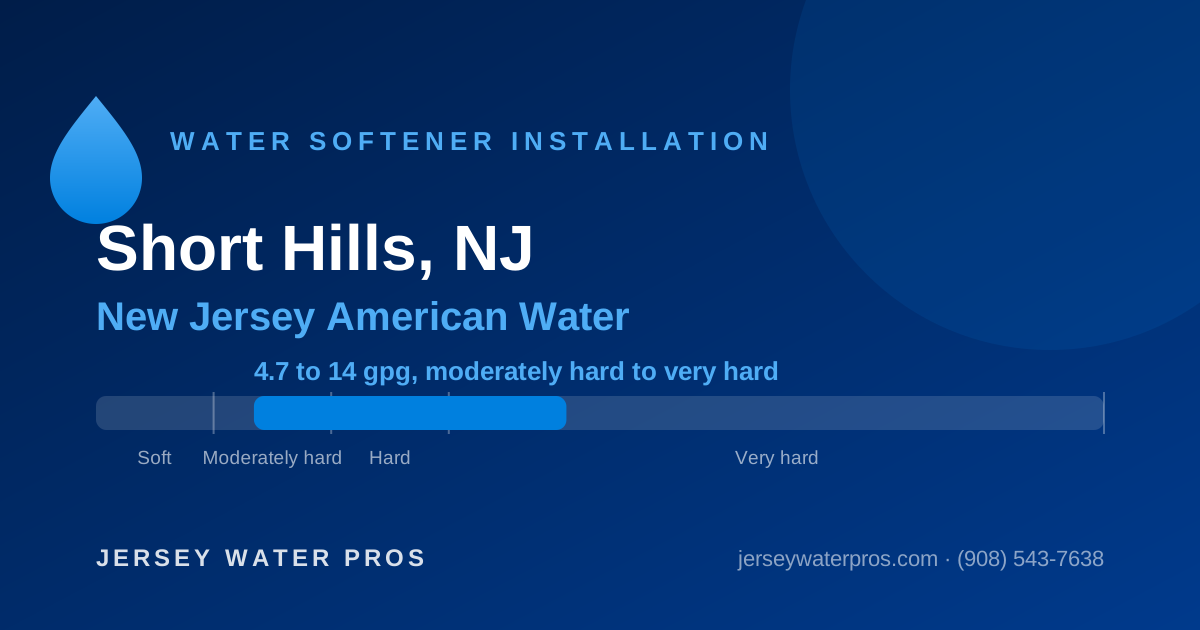
4.7 to 14 grains per gallon, moderately hard to very hard
County
Essex County
Water softener installation in Short Hills, NJ starts with pinning down what your particular street receives, because the Short Hills system blends Canoe Brook surface water, local wells, and purchased supplies, and hardness runs from about 4.7 to 14 grains per gallon with recent samples measured near 20. This page explains how an install works here, what the blend does to homes at the harder end, where whole house filtration fits, and how pricing comes together. Jersey Water Pros is based nearby in Summit, and every installation is performed by licensed NJ master plumbers.
Short Hills water
What Short Hills homeowners are dealing with
Short Hills is part of Millburn Township, and its taps are supplied by New Jersey American Water's Short Hills system (PWS ID NJ0712001). The system draws from the Canoe Brook Water Treatment Plant on the Passaic River and Canoe Brook, plus wells in the Brunswick aquifer and glacial sand-and-gravel formations, along with purchased water from suppliers including the NJAW Raritan system and the Passaic Valley Water Commission. That blend is why two streets in town can have noticeably different water.
The utility's own typical-quality sheet puts hardness at 4.7 to 14.0 grains per gallon, and the 2025 annual report recorded hardness as high as 342 ppm (about 20 grains) in its most recent sampling. That is firmly in water-softener territory on the high end. The 2025 report also lists PFOA and PFOS detections below current New Jersey limits, sodium from 5 to 139 ppm against a 50 ppm recommended upper limit, and a May 2025 disinfection violation at the Short Hills Well Station that prompted a Tier 2 customer notice.
To see what your street actually gets from this blended system, start with the utility's annual water quality report. Only results from an NJDEP-certified laboratory are official for your own tap, and we can help arrange that testing. If a softener or filtration looks right for your home, Jersey Water Pros offers a free in-home estimate.
Hard water and scale
New Jersey American Water's typical water quality sheet for the Short Hills system lists total hardness of 80 to 240 mg/L, or 4.7 to 14.0 grains per gallon. The system's 2025 annual water quality report lists an even wider measured range of 52 to 342 ppm, based on 2024 sampling. Because the system blends well water with surface water, hardness can differ noticeably from one neighborhood to the next. At the upper end of that range, scale buildup on fixtures, water heaters, and dishwashers is common.
PFAS detected below current NJ limits
The 2025 report shows PFOA at a highest running annual average of 9 ppt (range ND to 11 ppt) against New Jersey's MCL of 14 ppt, and PFOS at 5 ppt (ND to 6 ppt) against an MCL of 13 ppt, which is compliant with current state limits. Federal limits for PFOA and PFOS finalized in 2024 carry an April 2029 compliance deadline, though EPA has proposed allowing systems to request an extension to 2031. Under 2023 federal UCMR5 monitoring, individual PFOA samples in the system ranged from ND to 88 ppt, with an average of 2 ppt.
Lead service lines and home plumbing
In 2025 tap sampling, the system's 90th-percentile lead result was 3 ppb (below the 15 ppb action level), but 2 of 56 homes sampled did exceed the action level (range ND to 32 ppb). The utility maintains an online service line inventory map at newjerseyamwater.com/leadfacts and says it is removing lead and lead/galvanized service line piping over time under New Jersey legislation.
May 2025 disinfection violation at the Short Hills Well Station
In May 2025 the utility received a Notice of Violation after the chlorine residual at the Short Hills Well Station measured below the required 0.5 ppm minimum. The station was removed from service, affected customers received a Tier 2 public notice, and the utility reports it added additional levels of alarms and safeguards before returning the facility to service on May 19, 2025.
Water softener installation in Short Hills
Short Hills is part of Millburn Township, so the permit side of a water softener installation here runs through Millburn's construction office. New Jersey's Uniform Construction Code applies statewide, and tying treatment equipment into potable plumbing generally requires a plumbing permit and an inspection. We file that paperwork as part of the job and schedule the inspection when the work is complete.
The homes themselves shape the install. Many Short Hills houses carry multiple full bathrooms, larger water heaters or more than one, and long plumbing runs, so equipment is sized not just for hardness but for peak flow. A softener valve that cannot keep up with two showers and an irrigation zone running together will let hard water slip through at the worst time. During the free quote visit, a licensed NJ master plumber maps your fixtures, checks the meter and main shutoff, and picks the tie-in point, after the meter and ahead of the water heater branch, so every hot and cold line in the house is protected.
The unit needs a drain for regeneration and a standard outlet. Where a home has irrigation, we typically plumb it off the hard side, since softened water is wasted on a lawn and drives up salt use. Larger homes sometimes warrant twin-tank equipment so soft water stays available even during regeneration.
Most installations are completed in a single working day once the permit is in hand, and the schedule we quote up front includes the township's permit timing.
Short Hills hard water problems we fix
The Short Hills system's own paperwork explains why neighbors compare notes and get different answers. The utility's typical sheet lists 80 to 240 mg/L, about 4.7 to 14 grains per gallon, and 2024 sampling in the annual report ran as high as 342 ppm, roughly 20 grains. The system blends Canoe Brook surface water, local wells, and purchased supplies, so the mix reaching your street shifts with season and demand. One block can live at 5 grains while another fights very hard water.
What we see in Short Hills homes at the harder end:
- Scale crusting on fixtures and glass shower enclosures that are costly to replace
- Water heaters and hot water recirculation systems losing efficiency under mineral buildup
- Spotting on dishes and cloudy glassware
- Soap film on skin and hair, and stiff laundry
The report also lists sodium from 5 to 139 ppm against a 50 ppm recommended upper limit, worth knowing for sodium-restricted diets. A standard softener adds a little more sodium in exchange for hardness, so those households sometimes pair a softener with a reverse osmosis drinking tap or run potassium chloride instead of salt.
Because the blend varies, we size equipment from your number, not the town's range. The utility's annual water quality report gives the system-wide picture, and an NJDEP-certified lab test of your own tap, which we can help arrange, gives the number worth building a system around.
Whole house water filtration in Short Hills
Filtration questions in Short Hills usually come down to taste, PFAS, and lead, and the system's own reports give a factual starting point for each. Taste first: the utility maintains a disinfectant residual through the distribution system, which keeps water safe but is what many people notice at the tap. Whole house carbon filtration removes disinfectant taste and odor at every faucet and pairs cleanly with a softener at the same tie-in.
On PFAS, the 2025 report lists PFOA at a highest running annual average of 9 ppt and PFOS at 5 ppt, below New Jersey's limits of 14 and 13. Under 2023 federal UCMR5 monitoring, individual PFOA samples in the system ranged from non-detect to 88 ppt with an average of 2 ppt, a spread that leads some homeowners to want their own barrier. The sound way to do that is certified equipment: systems certified under NSF/ANSI standards for PFOA and PFOS reduction, in carbon or reverse osmosis form.
Lead is a house-by-house issue, not a system-wide one. The 2025 sampling put the 90th percentile at 3 ppb, but 2 of 56 homes exceeded the 15 ppb action level, with results up to 32 ppb. The utility posts its service line inventory map online, and certified lead reduction filters at the tap are a reasonable interim step for homes still on older lines. For official answers about your own tap, an NJDEP-certified lab test settles it, and we can help arrange one.
What water treatment costs in Short Hills
We will not put made-up prices on a page, and Short Hills is a town where honest quoting matters, because the same softener that suits a three bath colonial is undersized for a six bath house with irrigation and a recirculating hot water loop. Capacity and flow rate drive equipment cost more than anything else here. The water's variability matters too: a home testing near 5 grains needs far less capacity than one near the 20 grain readings in recent sampling, which is why we size from a test, not a town average.
Scope is the second driver. A softener alone, a softener with whole house carbon filtration, a reverse osmosis drinking tap, or certified PFAS or lead reduction equipment each change the number. Site conditions are third: finished basements and long runs to a drain take more labor than an open utility room. Permit fees are set by Millburn Township and pass through at cost.
The free quote makes it concrete. A licensed NJ master plumber walks the house, confirms your hardness from the utility's annual water quality report or a certified lab test we help arrange, measures flows and space, and delivers a written price for a specific configuration with permit and inspection included. There is no deposit required for the quote, and the visit usually takes under an hour.
What we install in Short Hills
Jersey Water Pros is based in Summit and installs across Essex County, with every job performed by a licensed NJ master plumber.
Water quality varies by street and season. Only a NJDEP-certified lab can produce official results for your own tap.
FAQ
Short Hills water questions
How hard is the water in Short Hills?
New Jersey American Water's typical figures for the Short Hills system are 80 to 240 mg/L, or about 4.7 to 14.0 grains per gallon, which is moderately hard to very hard on the USGS scale. The 2025 annual report measured hardness as high as 342 ppm, about 20 grains, at some points. Because the system blends well and surface water, the only way to know your home's number is a test of your own tap through an NJDEP-certified lab, which we can help arrange.
Is there PFAS in Short Hills water?
The system's 2025 water quality report lists PFOA at a highest running annual average of 9 ppt and PFOS at 5 ppt, below New Jersey's current limits of 14 and 13 ppt. Federal limits with an April 2029 compliance deadline remain on the books, though EPA has proposed allowing systems to request an extension to 2031. Homeowners who want an extra barrier can use point-of-use systems certified to NSF/ANSI standards for reduction of PFOA and PFOS, such as certified carbon or reverse-osmosis units.
Where does Short Hills water come from?
The Short Hills system uses the Canoe Brook Water Treatment Plant on the Passaic River and Canoe Brook, about 25 wells in local aquifers, and purchased water from neighboring systems including NJAW's Raritan system and the Passaic Valley Water Commission. The mix reaching your tap varies by location and season, which affects hardness and taste.
Do I need a permit for a water softener in Short Hills?
Generally yes. Short Hills is part of Millburn Township, so plumbing permits for treatment equipment are filed with Millburn's construction office under New Jersey's Uniform Construction Code, with an inspection after the work. Jersey Water Pros prepares the permit and schedules the inspection as part of the job.
How long does installation take in a Short Hills home?
Most installs finish in one working day once the permit is in place. Larger homes with long plumbing runs, twin-tank equipment, or added filtration can take longer, and we tell you that up front in the written quote. Water is typically off for only a few hours during the tie-in.
Which system fits Short Hills water?
It depends on your tap, because the system blends sources: published typical hardness runs about 5 to 14 grains per gallon, and recent sampling has measured close to 20. A softener sized to your tested number is the core fix; whole house carbon filtration helps with disinfectant taste; and homeowners wanting a PFAS or lead barrier should choose equipment certified under NSF/ANSI standards for those reduction claims. The utility's annual water quality report and an NJDEP-certified lab test, which we can help arrange, tell us which configuration your house actually needs.
Service area
Where we work in Short Hills
We install water softeners and whole house filtration across Short Hills and the surrounding Essex County towns.
Ready to fix your water in Short Hills?
Get a straight written quote from a local pro. If your water's fine, we'll tell you that too.