
Water Softener Installation in Maplewood, NJ
Softeners, whole house filtration, and licensed plumber installs for Maplewood homes, matched to what’s actually in Maplewood’s water.
Water source
New Jersey American Water, Short Hills system (PWSID NJ0712001), listed by NJDEP as New Jersey American Water Company Passaic Basin
Typical hardness
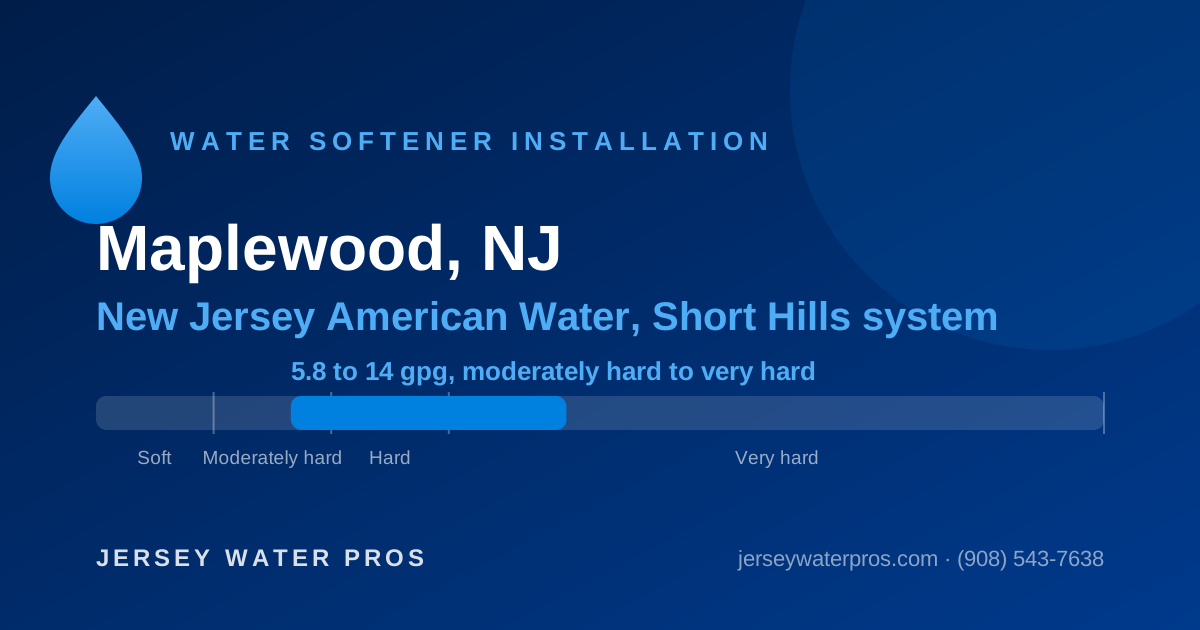
5.8 to 14 grains per gallon, moderately hard to very hard
County
Essex County
Water softener installation in Maplewood, NJ is sized against a moving target. New Jersey American Water's typical water quality sheet for the service area that includes Maplewood lists total hardness of 100 to 240 mg/L as CaCO3, which the utility itself converts to 5.8 to 14.0 grains per gallon, because this area blends Passaic River surface water with twelve Brunswick aquifer wells. That spread, plus manganese above the aesthetic limit and an accelerated lead service line program tearing up streets across the township, makes Maplewood a town where the details matter. This page covers the install, the problems worth fixing, whole house filtration, and cost ahead of your free quote.
Maplewood water
What Maplewood homeowners are dealing with
Maplewood has no municipal water department of its own. The township is served by New Jersey American Water, which NJDEP lists in Essex County as New Jersey American Water Company - Passaic Basin, PWSID NJ0712001, the system the company markets as its Short Hills system. The Jersey WaterCheck database lists Maplewood Township among the municipalities it serves, alongside roughly 268,800 people system-wide, and the utility publishes a typical water quality sheet specifically for the service area covering Irvington west of the Garden State Parkway, Livingston, Maplewood, Millburn (Short Hills), and South Orange. There is a wrinkle worth knowing: an East Orange Water Commission distribution reservoir sits underground in Maplewood, but that water is pumped from well fields on the East Orange Water Reserve through the White Oak Ridge Pumping Station and then flows by gravity to East Orange consumers.
On that area sheet, water reaching Maplewood comes from Passaic Valley Water Supply Commission and North Jersey District Water Supply Commission facilities on the Passaic River plus twelve wells drawing from the Brunswick aquifer. Total hardness runs 100 to 240 mg/L as CaCO3, which the utility itself converts to 5.8 to 14.0 grains per gallon, moderately hard to very hard on the USGS scale. Disinfection in this area is by chlorine, at 0.40 to 1.0 mg/L in the distribution system. Manganese runs from non-detect to 0.211 mg/L against a 0.05 mg/L aesthetic standard, iron from non-detect to 0.017 mg/L, and sodium from 23 to 115 mg/L. The system's 2025 annual report adds system-wide figures: hardness sampled from 52 to 342 ppm, manganese up to 2,464 ppb, sodium up to 139 ppm, chloride up to 256 ppm, and a May 2025 Notice of Violation for chlorine residual below the 0.5 ppm minimum at the Short Hills Well Station, which was removed from service with affected customers notified.
The part Maplewood residents have felt most is the digging. In spring 2025 the utility moved to replace 2,000 lead or galvanized service lines across the township and to test 3,000 more of unknown composition, running four crews at once and working one block at a time, with a community meeting held at Maplewood Town Hall on April 2, 2025. Under a 2021 state law, utilities must replace both the utility-owned and customer-owned portions of lead and galvanized service lines by 2031. To learn your own numbers, start with the utility's annual water quality report. Only NJDEP-certified lab results are official for a single tap, and we can help arrange that testing. Jersey Water Pros offers a free quote if you are considering treatment.
Hardness that varies by street and season
New Jersey American Water's typical water quality sheet for the service area that includes Maplewood lists total hardness of 100 to 240 mg/L as CaCO3, which the utility itself converts to 5.8 to 14.0 grains per gallon. The Short Hills system's 2025 annual water quality report shows total hardness sampled at the treatment plants from 52 to 342 ppm based on 2024 sampling. The spread exists because this area is fed by surface water from Passaic Valley Water Supply Commission and North Jersey District Water Supply Commission facilities on the Passaic River plus twelve wells in the Brunswick aquifer, and the wider system is 54 percent surface water, 25 percent groundwater, and 21 percent purchased water.
Manganese above the aesthetic limit
The utility's sheet for this service area lists manganese from non-detect to 0.211 mg/L against a 0.05 mg/L secondary standard, and the system's 2025 annual report shows treatment plant detections from non-detect to 2,464 ppb against a 50 ppb secondary limit. The report explains that the recommended upper limit for manganese is based on staining of laundry rather than a health standard. Manganese can leave brown to black marks on tubs, toilets, and laundry. Iron on the same sheet is much lower, from non-detect to 0.017 mg/L against a 0.3 mg/L limit.
An accelerated lead service line replacement program across the township
In spring 2025 New Jersey American Water moved to replace 2,000 lead or galvanized service lines throughout Maplewood beginning in April and to test 3,000 more of unknown composition, bringing in four crews to work in different parts of town one block at a time. Local reporting said the process would take through the end of that year and could extend into 2026. Maplewood Township and the utility held a community meeting at Town Hall on April 2, 2025 to explain the program, where plans to move water meters curbside were also presented. The Jersey WaterCheck database's 2024 inventory for this system lists 4,369 known lead service lines and about 36,038 lines of unknown material.
Lead results, PFAS, sodium and chloride in the system report
The Short Hills system's 2025 annual water quality report shows lead compliance was achieved with a 90th percentile of 3 ppb, but the range ran from non-detect to 32 ppb and 2 of 56 sampled homes were above the 15 ppb action level. PFOA was reported at a highest running annual average of 9 ppt against New Jersey's 14 ppt MCL, with individual results from non-detect to 11 ppt, and PFOS at 5 ppt against 13 ppt with results from non-detect to 6 ppt. Under 2023 UCMR5 monitoring the same report lists individual PFOA samples in this system from non-detect to 88 ppt, averaging 2 ppt, against a proposed U.S. EPA MCL of 4.0 ppt. Sodium ran 5 to 139 ppm against a 50 ppm recommended upper limit and chloride reached 256 ppm against a 250 ppm secondary limit.
Water softener installation in Maplewood
A Maplewood water softener installation starts with a look at the basement. Much of the township was built in the first decades of the 1900s, and those basements bring their own conditions: a meter set close to the front wall, a boiler sharing the mechanical space, older shutoff valves, and sometimes galvanized pipe near the tie-in point. We check all of that during the free quote so nothing is discovered on install day.
The softener itself ties into the main line after the meter and ahead of the water heater, with a bypass valve so the unit can be serviced without shutting off the house. Outdoor spigots are usually left on untreated water. The control valve needs a standard outlet and the regeneration cycle needs a drain, and where neither is close by we plan the routing in advance rather than improvising.
There is a timing note specific to Maplewood. New Jersey American Water has been running an accelerated lead service line program across the township and has also been moving water meters curbside, which means crews, road closures, and work at the front of houses. A softener install is separate work inside your home, but it is worth telling us if your street is scheduled so we can sequence around it.
Permits apply. A softener tie-in is a plumbing alteration under New Jersey's Uniform Construction Code, filed with the Township of Maplewood construction office. We prepare and file it, a licensed New Jersey master plumber does the work as state rules require, and the township inspects it. On site, plan on a few hours to one day.
Maplewood hard water problems we fix
Maplewood's hard water problems start with a range rather than a single number. The utility's sheet for the area covering Maplewood lists total hardness of 100 to 240 mg/L as CaCO3, which it converts to 5.8 to 14.0 grains per gallon, and the system's 2025 annual report shows treatment plant sampling from 52 to 342 ppm. A home at the low end sees slow scale and spotting. A home at 14 grains sees crusted showerheads, cloudy glassware, laundry that never softens, and a water heater filling with sediment years ahead of schedule.
The second problem is staining, and hardness numbers do not capture it. The utility's area sheet lists manganese from non-detect to 0.211 mg/L against a 0.05 mg/L secondary standard, and the system's annual report shows detections as high as 2,464 ppb. Manganese leaves brown to black marks on tubs, toilets, and laundry. The report describes that limit as an aesthetic one set around laundry staining rather than a health standard, but the marks are stubborn and they come back.
A softener sized to your end of the hardness range stops new scale at the point of entry, and it can carry small amounts of dissolved manganese along the way. Recurring dark staining usually calls for dedicated filtration ahead of the softener instead, which is a design decision rather than an upsell. Which one your house needs comes out of your own numbers, and we work from the utility's published figures and, where it matters, a certified lab result rather than a guess.
Whole house water filtration in Maplewood
Whole house water filtration in Maplewood answers the taste and staining questions that softening leaves untouched. The utility's sheet for this service area lists chlorine as the disinfectant, with residuals of 0.40 to 1.0 mg/L in the distribution system, and that is what most people notice in a glass of tap water or a pot of coffee. Whole house carbon reduces it at the point of entry, so showers, ice, and cooking water all improve at once. Carbon ahead of a softener also protects the softening resin, which disinfectants degrade over time.
The documented record shapes the rest. The system's 2025 annual report lists PFOA at a highest running annual average of 9 ppt against New Jersey's 14 ppt MCL and PFOS at 5 ppt against 13 ppt, both in compliance, with individual PFOA results from non-detect to 11 ppt. UCMR5 monitoring in 2023 recorded individual PFOA samples in this system as high as 88 ppt, averaging 2 ppt, against a proposed U.S. EPA MCL of 4.0 ppt. Households that read those numbers and want a wider margin should look for equipment certified to NSF/ANSI 53 for reduction of PFOA and PFOS.
Two more lines from the same report matter here. Sodium ran 5 to 139 ppm against a 50 ppm recommended upper limit, and chloride reached 256 ppm against a 250 ppm secondary limit. A reverse osmosis system certified to NSF/ANSI 58 at the kitchen sink addresses both at the drinking tap and pairs naturally with a softener. For lead, where 2 of 56 sampled homes were above the action level even though the system met the compliance standard, a tap filter certified to NSF/ANSI 53 for lead reduction is a sensible interim step while your own service line is confirmed.
What water treatment costs in Maplewood
We do not publish a flat price for water treatment in Maplewood. What the work costs depends on which problems your house actually has, and in this township that list is longer than average.
- Where your street falls in the hardness range. A softener for 6 grains per gallon is not the same machine as one for 14.
- Whether staining is part of the picture. Manganese above the aesthetic limit can mean an added filtration stage ahead of the softener.
- Scope. Softener alone, whole house carbon for chlorine taste, reverse osmosis at the sink, or a combination.
- Site and permit specifics. Tie-in access in an older basement, drain routing, and Township of Maplewood permit fees passed through at cost.
We do not offer water testing of any kind. The utility publishes this area's numbers in its annual water quality report, and official results for your own tap come from an NJDEP-certified lab, which we can help arrange. That approach keeps the recommendation defensible, which matters under New Jersey's consumer protection law.
The free quote is a visit from a licensed NJ master plumber, a review of the published data for your area, an inspection of the mechanical space, and a written price covering equipment, labor, permits, and startup. There is no charge and no obligation, and Summit is a short drive, so service after the install stays local.
What we install in Maplewood
Jersey Water Pros is based in Summit and installs across Essex County, with every job performed by a licensed NJ master plumber.
Water quality varies by street and season. Only a NJDEP-certified lab can produce official results for your own tap.
FAQ
Maplewood water questions
How hard is the water in Maplewood, NJ?
New Jersey American Water's typical water quality sheet for the service area that includes Maplewood lists total hardness of 100 to 240 mg/L as CaCO3, which the utility itself converts to 5.8 to 14.0 grains per gallon. That runs from moderately hard to very hard on the USGS scale. The Short Hills system's 2025 annual report shows 2024 treatment plant sampling from 52 to 342 ppm, so the number at your tap depends on the mix of Passaic River surface water and Brunswick aquifer well water feeding your neighborhood. The utility's annual water quality report, or an NJDEP-certified lab test we can help arrange, will confirm your own figure.
Who supplies Maplewood's water and where does it come from?
New Jersey American Water. NJDEP lists the system in Essex County as New Jersey American Water Company - Passaic Basin, PWSID NJ0712001, which the company calls its Short Hills system, and the Jersey WaterCheck database lists Maplewood Township among the municipalities served. Per the utility's sheet for this service area, the water is a blend of surface supplies from Passaic Valley Water Supply Commission and North Jersey District Water Supply Commission facilities on the Passaic River and twelve wells drawing from the Brunswick aquifer. The East Orange Water Commission reservoir located in Maplewood holds water pumped from the East Orange Water Reserve that flows by gravity to East Orange consumers.
Why is New Jersey American Water digging up so many Maplewood streets?
Because the utility accelerated its lead service line work here. In spring 2025 it moved to replace 2,000 lead or galvanized service lines throughout Maplewood beginning in April and to test 3,000 more whose material was unknown, running four crews at once and working one block at a time, with local reporting saying the process would take through the end of that year and could extend into 2026. The township and the utility held a community meeting at Maplewood Town Hall on April 2, 2025, where plans to move water meters curbside were also presented. A 2021 state law requires utilities to replace both the utility-owned and customer-owned portions of lead and galvanized service lines by 2031.
Do I need a permit to install a water softener in Maplewood?
Yes. A softener tie-in is a plumbing alteration under New Jersey's Uniform Construction Code, permitted through the Township of Maplewood construction office. Jersey Water Pros prepares and files the paperwork as part of the job, the installation is performed by a licensed NJ master plumber as state rules require, and the township inspects the completed work.
How long does a water softener installation take in Maplewood?
One day of on-site work covers most single-family homes. Older Maplewood basements can add time if galvanized pipe near the tie-in point needs replacing or if the drain run has to be extended. Permit review and the township inspection add calendar days around the install. If New Jersey American Water has lead service line work or curbside meter relocation scheduled on your street, tell us and we will sequence around it.
Which water treatment system does Maplewood water need?
It depends on your street's numbers. With published hardness of 5.8 to 14.0 grains per gallon for this service area, most homes benefit from a properly sized metered softener. Homes with dark staining may need manganese-focused filtration ahead of it, since the utility's own sheet shows manganese well above the 0.05 mg/L aesthetic standard at some points. Chlorine taste is a separate question that whole house carbon answers, and households watching sodium or chloride often add reverse osmosis at the kitchen sink. We work it out from the published data during the free quote.
Service area
Where we work in Maplewood
We install water softeners and whole house filtration across Maplewood and the surrounding Essex County towns.
Ready to fix your water in Maplewood?
Get a straight written quote from a local pro. If your water's fine, we'll tell you that too.